
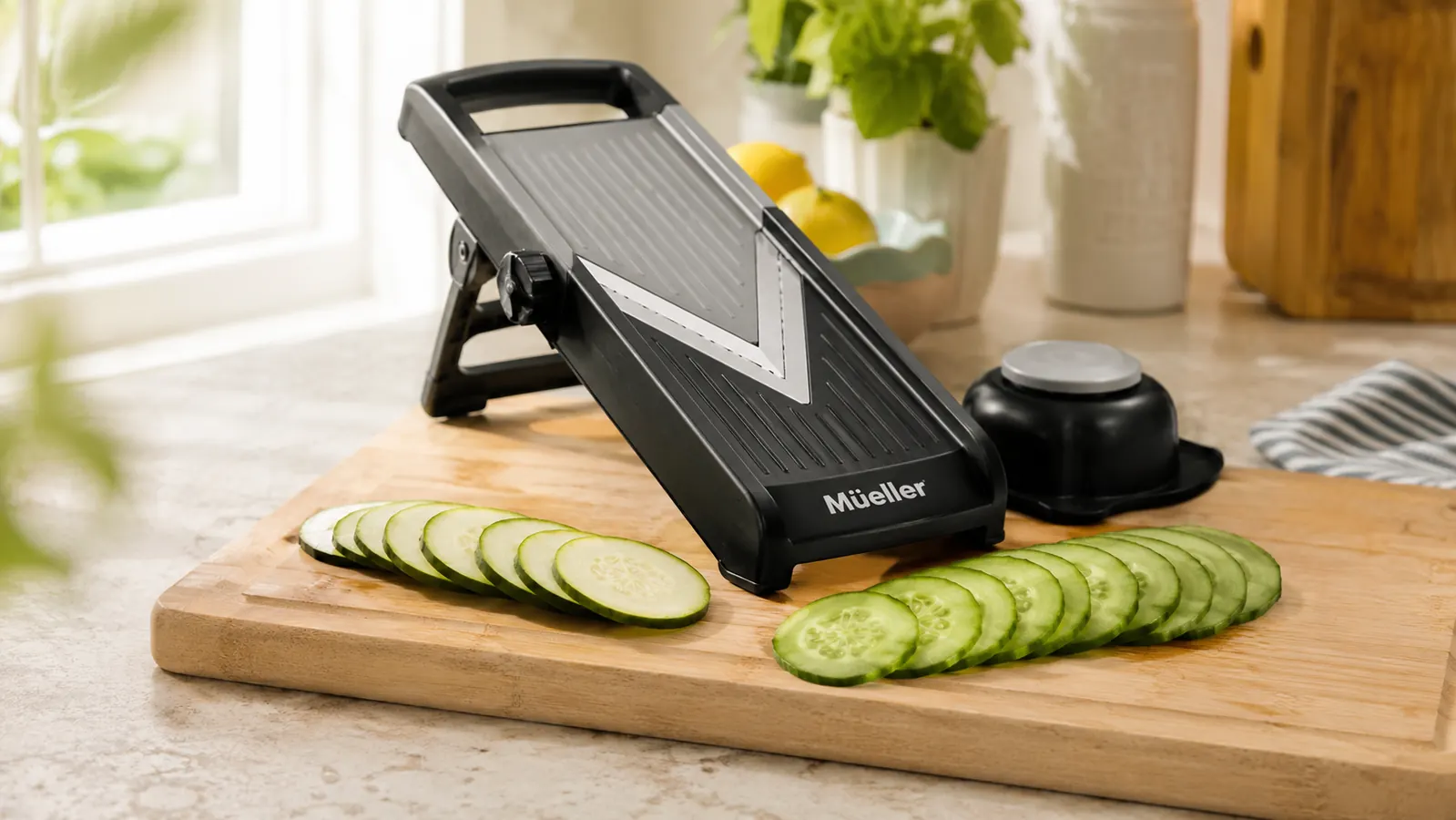
Eight months ago I bought the Mueller Pro-Series Mandoline Slicer on a Sunday afternoon after spending 22 minutes hand-slicing two zucchini for a sheet-pan dinner. My knife is sharp. My technique is fine. But that prep was tedious, my slices were uneven, and by the time the vegetables hit the oven they were three different thicknesses, which means some came out mushy while others were still firm. I cook every night, I care about eating well, and I was tired of inconsistent results from inconsistent cuts.
I want to be clear about what this review is not. It is not a first-week impression. I have used this mandoline at least four times a week for 34 weeks on cucumbers, zucchini, radishes, fennel, beets, sweet potatoes, onions, and apples. I have run it through the dishwasher. I have dinged it. I have replaced one of the blade inserts. I know where it shines and I know where it frustrates. Here is all of it.
The Quick Verdict
A genuinely useful daily prep tool at a fair price, held back only by a food holder that takes practice and blade inserts that need careful handling.
Amazon Check Today's Price →Still spending 20 minutes slicing vegetables for a single meal?
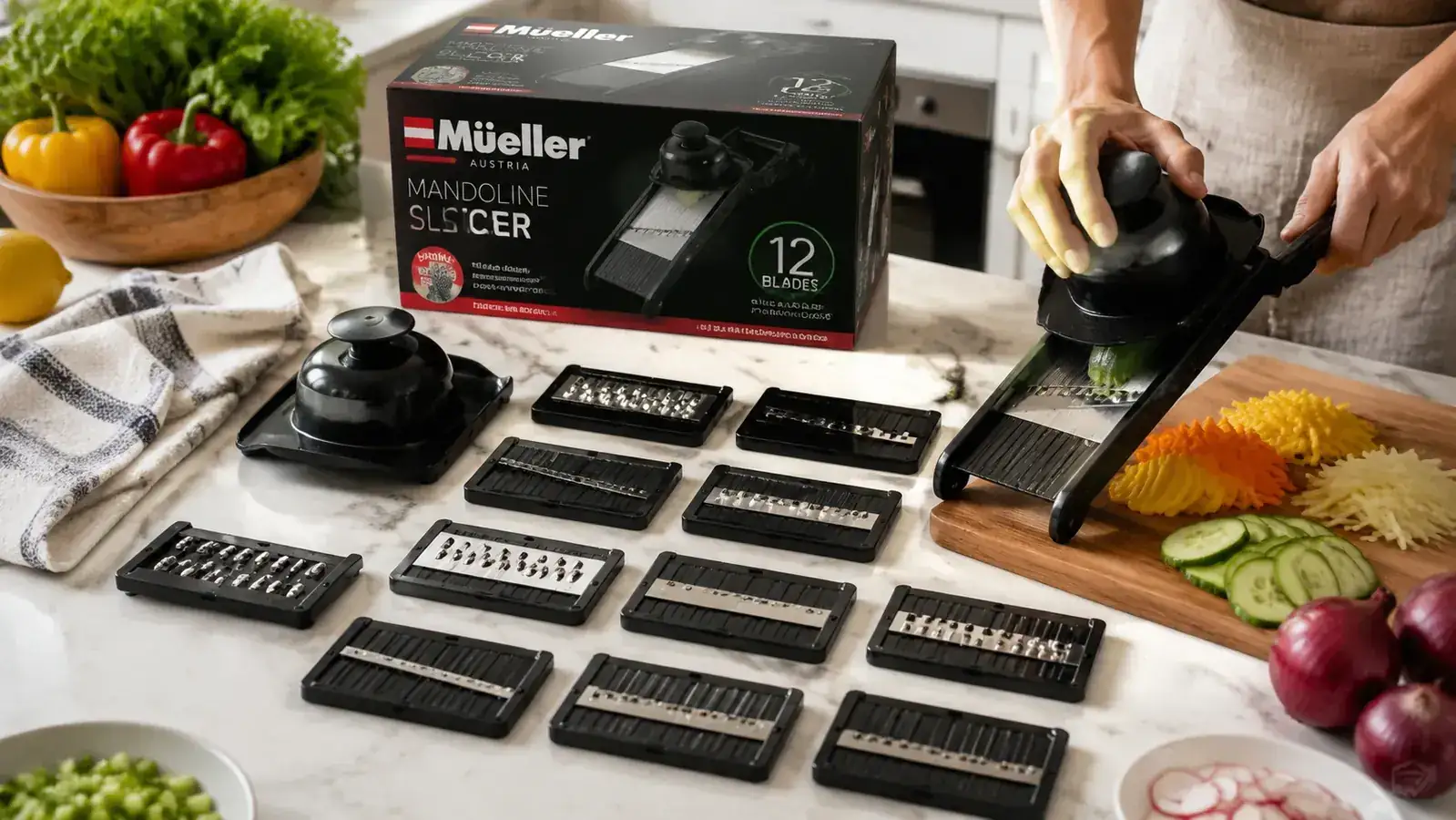
The Mueller Pro-Series Mandoline comes with 12 blade inserts, a food holder, and cut-resistant gloves. It has earned a permanent spot in my prep rotation after 8 months of daily cooking.
Amazon Check Today's Price on Amazon →How I Have Used It Over 8 Months
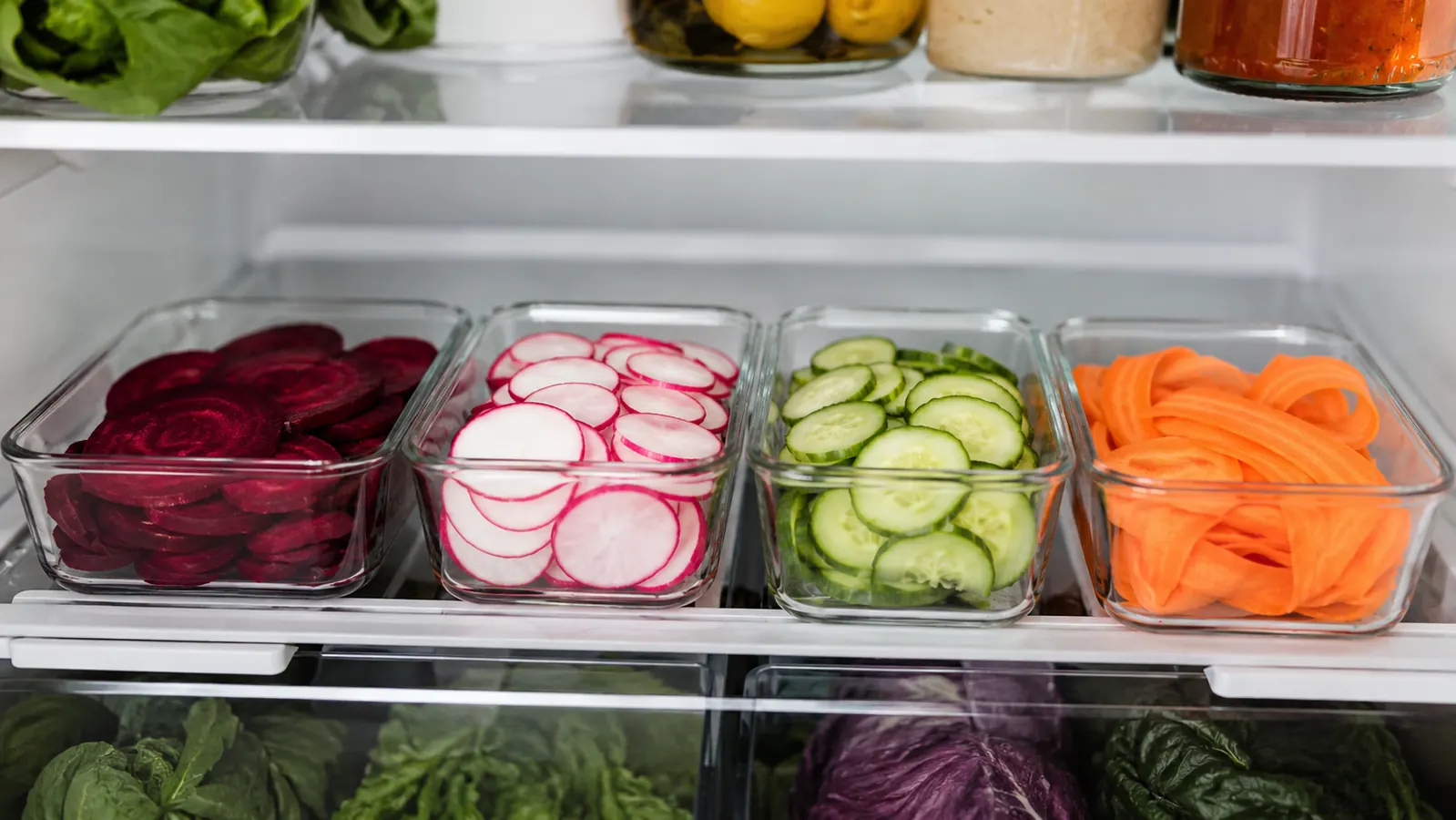
My kitchen workflow is built around eating as many vegetables as possible without making prep feel like a chore. I batch-cook on Sundays and again on Wednesdays, and slicing is the single biggest time sink in that process. A sharp chef knife does not solve this problem because the issue is not cutting ability, it is cutting consistency at volume. When I am slicing a pound of beets for a grain bowl or a full English cucumber for a salad that has to last four days in the fridge, I need uniform thickness so everything dresses evenly and stores at the same texture.
The Mueller mandoline replaced my knife for almost every high-volume slicing task. The 3mm setting is my default for most vegetables and it produces slices I could not reliably replicate by hand. The 1mm setting for radishes and fennel is genuinely paper-thin. I use the julienne blade for carrots and zucchini at least twice a week. The mandoline lives on the counter during prep and goes in the cabinet when I am done because I have no interest in kitchen clutter that does not work.
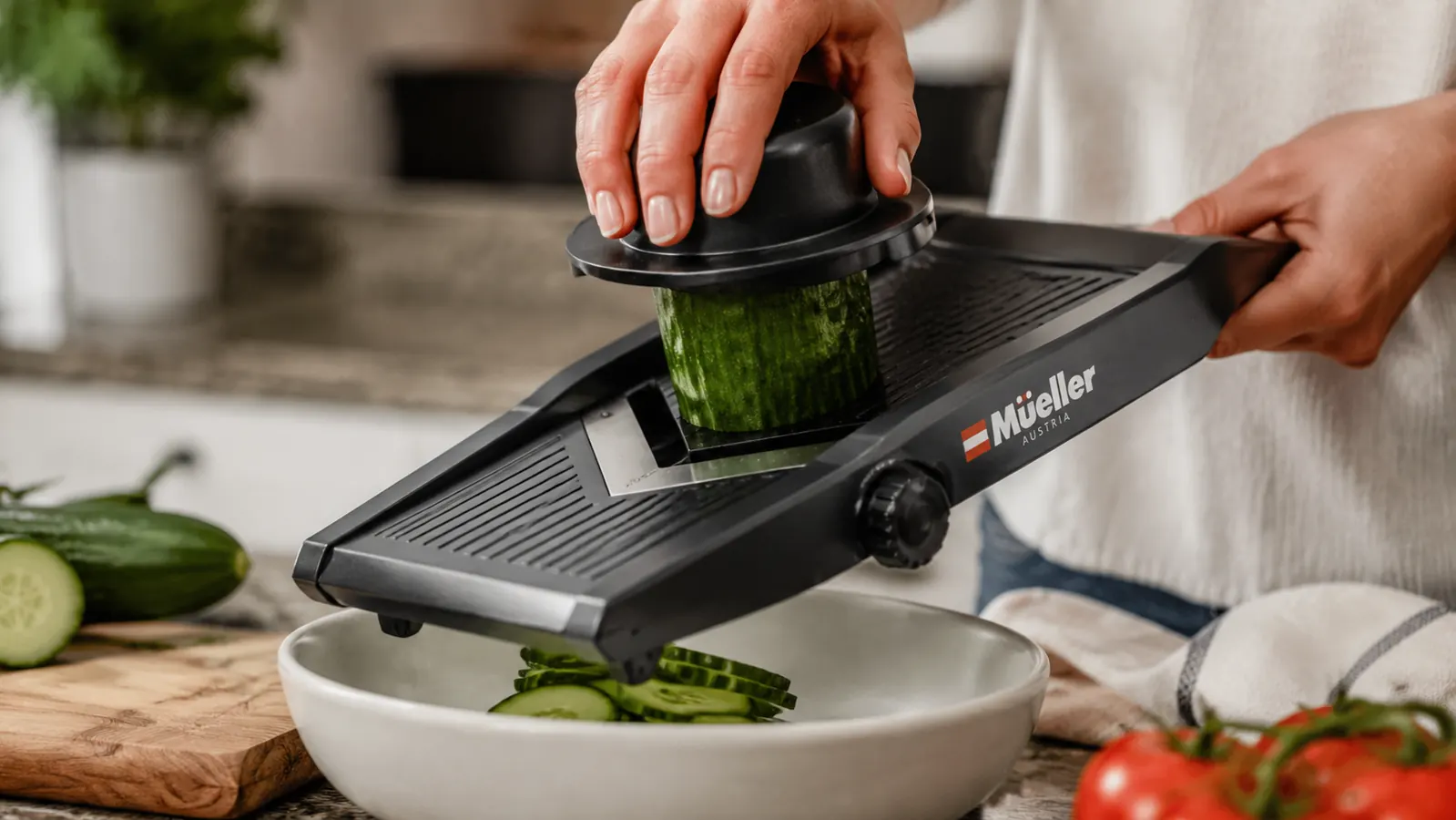
The food holder is the most important thing to get right. For the first two weeks I was inconsistent with it and I nicked my finger twice on the first day without it. After week three it became muscle memory. I now always use the holder or the cut-resistant gloves that came in the box, and I have had zero incidents since. If you treat this tool with the same respect you give a sharp chef knife, it will not bite you.
Blade Performance: What the 12-Blade Count Actually Means
Mueller advertises 12 blades, which sounds like marketing fluff until you lay them all out and realize each one has a distinct use case. The flat slicing blade is the workhorse. The three thickness-adjustment options let me dial from thin for salads to medium for roasting to thicker planks for grilling. The julienne blades in fine and coarse cut are genuinely sharp and produce uniform strips rather than the shredded mess you get from a box grater.
The waffle and crinkle blades are included but I have used them fewer than ten times. They work, but they are finicky to seat correctly and require more downward pressure than the flat blades. If you are buying this primarily for decorative cuts, manage your expectations a bit. If you are buying it primarily for everyday flat slicing and julienne work, those blades perform well beyond what the price suggests.
Blade sharpness held up well through the first six months with regular dishwasher cleaning. Around month seven I noticed the fine julienne blade starting to drag instead of cut cleanly on firm vegetables like raw beets. I ordered a replacement insert for a few dollars, which told me Mueller treats these as consumables. That is the right way to think about them. Budget for occasional blade replacement if you use this heavily.
Real Prep Time Comparison: Knife vs. Mandoline
I timed myself on a task I do regularly: slicing two pounds of mixed vegetables for a sheet-pan dinner. Knife: 18 minutes. Mueller mandoline: 4 minutes and 20 seconds. That is not a cherry-picked result. I have done this comparison multiple times and the gap is consistently between 14 and 16 minutes on that task. Over a year of cooking five nights a week, that is roughly 70 hours of prep time saved.
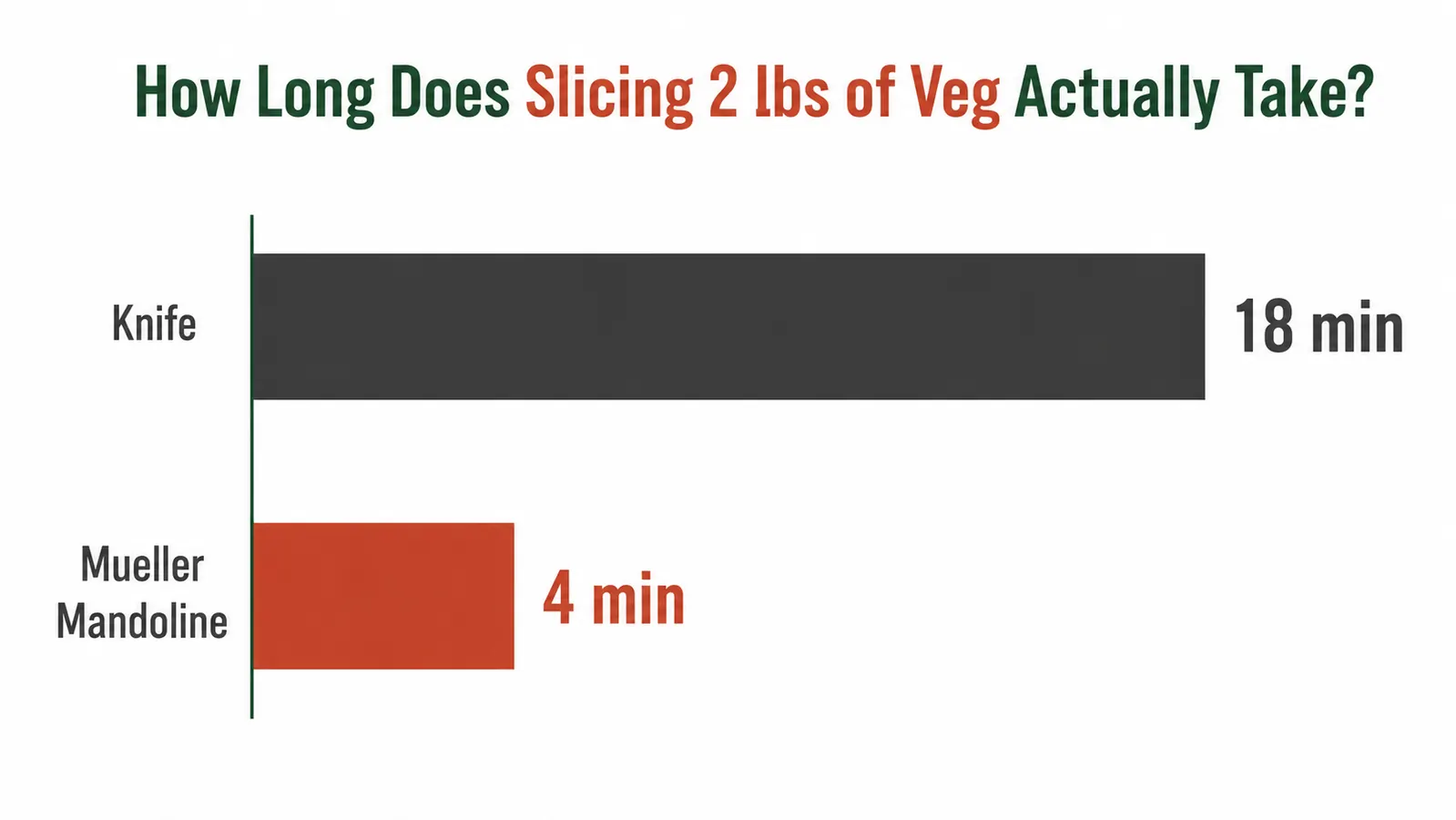
The consistency benefit is harder to quantify but just as real. When every slice is 3mm, your salads dress evenly, your stir-fries cook evenly, and your sheet-pan meals actually come out of the oven at the same time. This matters a lot more than it sounds if you care about both the nutritional value of vegetables and actually enjoying eating them.
My knife is sharp and my technique is fine. But a good mandoline gives you something a knife cannot: identical slices, every single time, in one quarter of the time.
Build Quality After 8 Months of Actual Use
The body is food-grade ABS plastic with a stainless steel cutting frame. It feels sturdy for the price, though it is not the heavy-duty feel of a commercial mandoline. The feet grip the counter well and I have never had the unit slip during use. The blade-locking mechanism clicks firmly and does not loosen during a session.
The food holder is my biggest complaint. The prongs that grip food work well on firm vegetables but struggle with softer items like ripe tomatoes and cooked beets. The handle grip is comfortable but the overall design requires you to maintain fairly even downward pressure throughout the slice or the food will tilt. This is learnable, but it takes two or three weeks of regular use to feel natural. Expect a small frustration window early on.
One genuine build concern: the plastic blade storage slot on the body has hairline cracking around one corner from repeated insert-and-remove cycles. It is purely cosmetic and has not affected function, but it tells me the plastic is not rated for heavy daily use over several years. I treat blade swaps as a monthly ritual now rather than switching blades mid-session.
Cleanup: Honest Assessment
The body and blades are dishwasher safe, which I confirmed and use regularly. Blade inserts go in the top rack in the included blade storage block. The main body fits in my dishwasher sideways. Hand washing is faster if I am in a hurry because the blade slots accumulate food that needs a gentle brush to clear. I keep a soft brush near the sink for this.
One thing I did not expect: the mandoline is significantly faster to clean than my box grater, which has always been my least favorite cleanup task. Because the slices are clean cuts rather than grated pulp, there is almost no food stuck to the surface. A quick rinse and it is mostly done. Full dishwasher cleaning once a week has kept it in good condition.
Alternatives I Considered and Why I Stuck With This One
Before buying the Mueller I looked seriously at the OXO Handheld Mandoline, which several food writers recommend for its compact size and easy storage. The OXO is a genuinely good tool for quick single-vegetable tasks and costs less. But it handles only one thickness setting and one blade orientation, which limits it to a supporting role in the kitchen rather than a primary prep tool. If you occasionally slice cucumbers for a snack, the OXO is excellent. If you prep vegetables at volume four nights a week, it will become a bottleneck. I cover this comparison in more detail in my full breakdown of the Mueller mandoline vs. the OXO handheld slicer.
I also looked at the Benriner Japanese mandoline, which costs more and has a devoted following among serious home cooks. The Benriner is built better and the blade is sharper out of the box. But it has fewer included blades and no food holder. For a cook who prioritizes safety and variety of cuts, the Mueller remains the better value at this price point. If I were willing to spend twice as much and learn proper Japanese mandoline technique including the correct finger guard, I might feel differently.
What I Liked
- Cuts prep time by 75 percent on high-volume slicing tasks
- 12 blade inserts cover nearly every daily prep need
- Consistent slice thickness improves cooking results noticeably
- Dishwasher safe body and blades, easy cleanup
- Cut-resistant gloves included in the box
- Replacement blade inserts are inexpensive and easy to find
- Suction feet hold firmly on any counter surface
Where It Falls Short
- Food holder takes 2 to 3 weeks to feel natural and requires consistent technique
- Blade inserts require careful handling and eventual replacement under heavy use
- Waffle and crinkle blades are finicky to seat and use correctly
- Plastic blade storage shows minor cosmetic cracking over time
- Softer vegetables like ripe tomatoes are difficult to manage with the food holder
Who This Is For
This mandoline is built for the home cook who prepares vegetables at real volume and wants consistent results without paying for a commercial tool. If your idea of healthy cooking means a salad with five different vegetables, a sheet-pan dinner twice a week, or a stir-fry where the carrots and zucchini actually cook through at the same time, the Mueller will change how you cook. It earns its drawer space the first time you use it on a serious prep session. I also recommend it for anyone who has been relying on a box grater for shredding and wants cleaner, more versatile cuts. The julienne blades alone are worth the price if you eat a lot of raw vegetable salads.
Who Should Skip It
If you cook for one person and your vegetable prep is limited to occasional slicing, this tool will feel like overkill. A sharp knife and a Y-peeler handle light prep work with less setup and cleanup. The Mueller also requires a real commitment to learning the food holder, and if you are not willing to invest two or three weeks of regular use before it feels natural, you will likely put it in a drawer and resent it. And if fine manual craftsmanship is important to you, the all-plastic construction will feel underwhelming compared to Japanese mandolines at higher price points. For those cooks, I would point toward the Benriner or a similar tool built to last a decade of daily use. Check out my overview of the 10 reasons a mandoline slicer changes meal prep for more context on whether this category of tool is right for your cooking style.
If fresh vegetables are a daily part of how you eat, this tool pays for itself in the first week.
The Mueller Pro-Series Mandoline Slicer is available on Amazon with 12 blade inserts, cut-resistant gloves, and a food holder included. At the current price, it is one of the highest-value prep tools in my kitchen.
Amazon Check Today's Price on Amazon →