

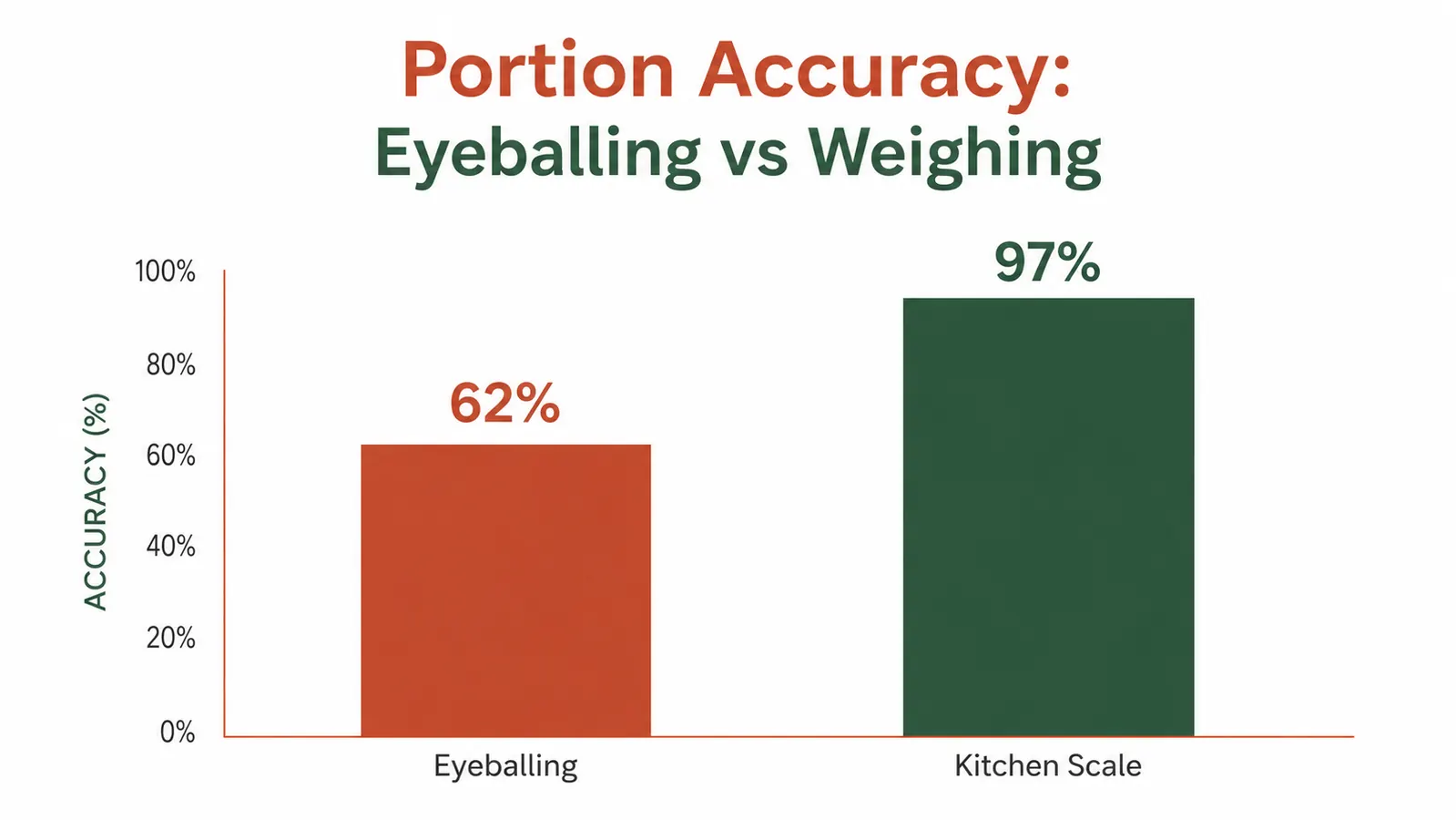
For three years I measured everything with cups and spoons and wondered why my banana bread came out dense half the time, why my overnight oats never quite hit the macro numbers my app calculated, and why my chicken portions drifted 40 to 60 grams from what I thought I was eating. A nutritionist friend finally told me to stop guessing and just weigh things. I bought the Etekcity Food Kitchen Scale on a Tuesday for about fourteen dollars. That was twelve months ago. I have used it every single day since, including a period in January when I was tracking macros aggressively and a stretch in March when I was baking sourdough three times a week. This is everything I learned.
If you are still using measuring cups for anything beyond large liquid volumes, I would gently argue you are making your cooking harder than it needs to be. That is not a knock on you. It was me for years. The measuring cup is not a precision tool. It is a convention we inherited from a time before affordable digital scales existed. At fourteen dollars, the Etekcity removes that excuse entirely.
The Quick Verdict
A genuinely useful everyday scale with excellent accuracy for the price. The auto-off timing is the only real friction, but it is easy to work around once you know it is coming.
Amazon Check Today's Price →Stop eyeballing portions. Your recipes and your macros will both thank you.
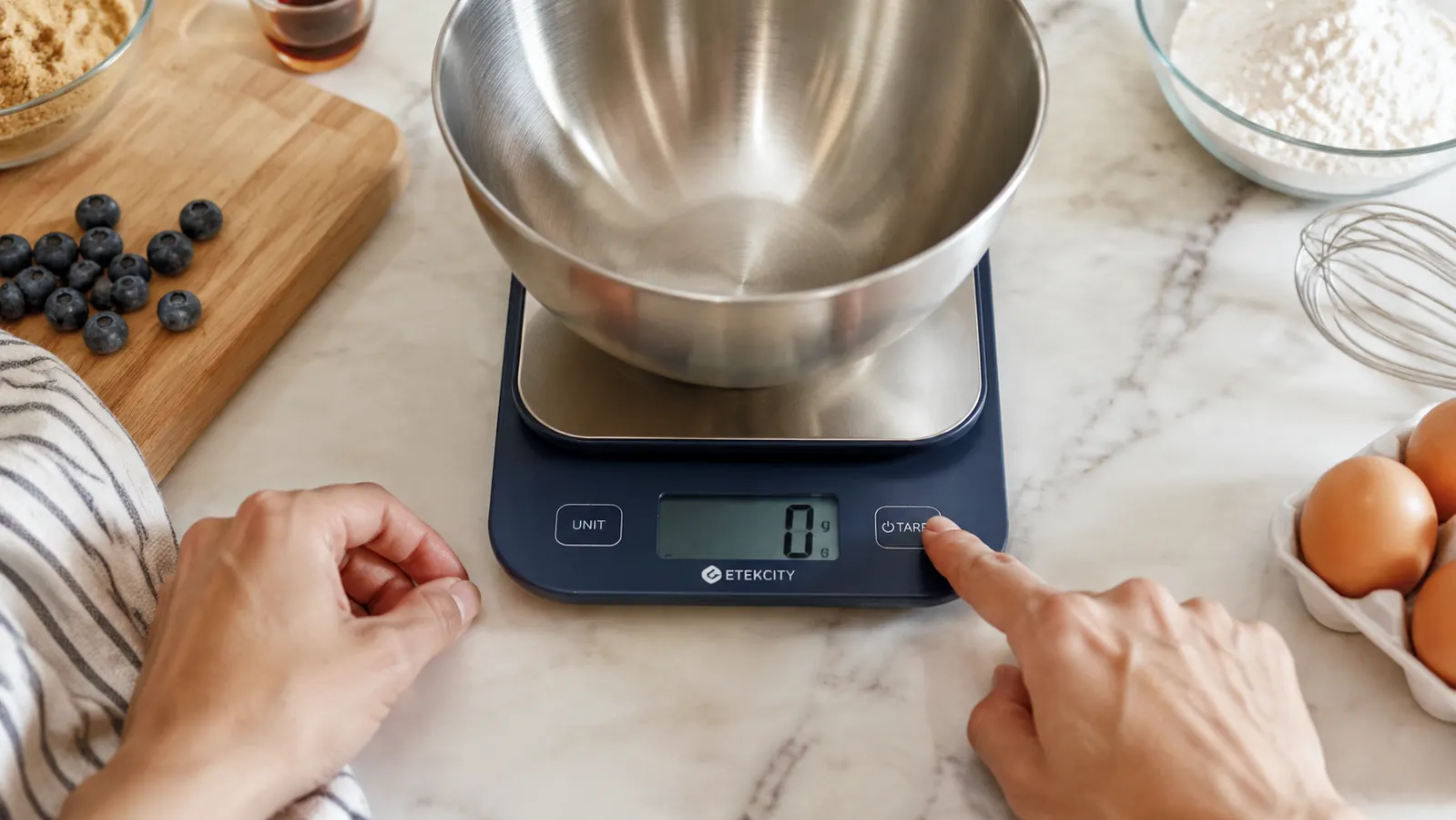
The Etekcity Food Kitchen Scale weighs in grams, ounces, milliliters, and pounds with 0.1g precision. Over 174,000 Amazon reviews and counting.
Amazon Check Today's Price on Amazon →How I Have Used It Over the Past Year
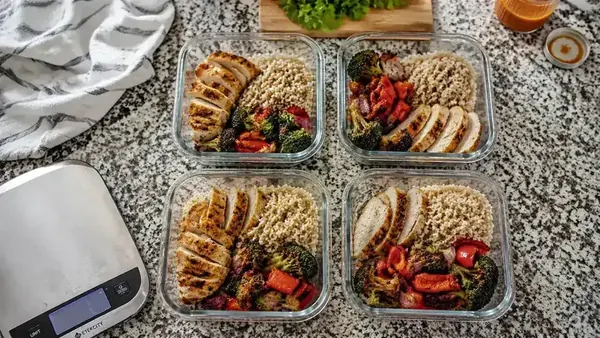
My use breaks into three distinct phases. From July through October I was focused on clean meal prep for the week. Every Sunday I would weigh out 150 grams of dry oats for five daily portions, hit the tare button between each protein and vegetable, and stack glass containers in the fridge. The scale sat on the counter the whole time. I probably ran it for two to three hours straight some Sundays.
November through February was macro tracking season. I was eating in a deficit and I needed numbers I could actually trust. I weighed everything, including things I had always estimated before, like peanut butter, shredded cheese, and sliced avocado. The jump in precision was humbling. What I thought was a one-tablespoon serving of almond butter was reliably coming in at 22 to 25 grams instead of the 16 grams a tablespoon is supposed to be. Small errors, but they compound across a whole day.
March through June shifted to baking. I started a sourdough project and quickly discovered that weighing flour is not optional if you want consistent results. The difference between 400 grams and 430 grams of bread flour is the difference between a good loaf and a dense brick. I also weighed starter, water temperature did not matter to the scale obviously but water quantity did, and salt down to the gram. My results became dramatically more consistent by week three.
Accuracy: What I Actually Found
The Etekcity claims 0.1 gram precision up to 5 kilograms. I tested this informally against a kitchen scale at a friend's house that cost three times as much. On five different items ranging from 4 grams of salt to 340 grams of chicken breast, the two scales agreed within 0.2 grams every time. For home cooking and macro tracking, that is effectively identical. The only situation where I found it slightly inconsistent was weighing items under 2 grams, which matters if you are measuring small amounts of baking yeast or spice blends. Below 2 grams I sometimes saw a 0.2 to 0.3 gram variation between consecutive readings with the same item. Still workable, but worth knowing.
For anything above 5 grams the scale reads confidently and consistently. Tare function works exactly as advertised. You can stack a bowl, tare to zero, add an ingredient, tare again, add the next ingredient, and keep building through a whole recipe without doing any mental math. That workflow alone saved me more time than I expected.
What I thought was one tablespoon of almond butter was consistently 22 to 25 grams. The recommended serving is 16 grams. I was eating 50 percent more than I thought, every single day.
Build Quality After Twelve Months of Real Use
The platform is stainless steel, which I appreciate because it wipes clean easily and does not stain from spills. After a year of daily use it still looks basically new. I have dropped it once, from about counter height onto a tile floor. It survived without any visible damage and still reads accurately. The button response is tactile and has not gotten mushy or sticky over time.
The display is a bright backlit LCD that is easy to read in any lighting. I have used this at six in the morning with only the range hood light on and I could still read it without squinting. The glass platform on some competing scales looks sleeker but scratches more easily. I will take stainless steel every time for a daily use item.
Two batteries came included and they lasted about nine months of daily use before I replaced them. That is longer than I expected. Replacement is a standard AAA pair, not some proprietary battery you have to hunt for.
The One Annoyance You Will Encounter
The auto-off function cuts the scale after about two minutes of inactivity. During normal weighing this is not a problem. But if you step away mid-recipe to do something else and come back, the scale has turned off and you have lost your tare. This happened to me a handful of times in the first month. My solution now is to keep a running tally on a sticky note when I am doing complex builds, or to simply press the unit button to wake it up rather than the on button, which sometimes resets my unit selection.
It is a minor complaint for a fourteen dollar scale. Premium scales like the Escali Primo or the OXO food scale have longer auto-off windows and some let you disable the feature entirely. The Etekcity does not give you that control. If you are a slow and deliberate cook who tends to pause mid-recipe, just be aware this is coming.
Who This Is For
This scale is a strong fit for anyone who wants to stop guessing portions and start eating more intentionally. It is especially good if you are tracking macros, following any kind of structured nutrition plan, baking from weight-based recipes, or cooking fresh meals multiple times a week and want consistent results. At this price, it is also a genuinely low-stakes first purchase. If you are scale-curious but not sure whether you will actually build the habit, this is the right place to start. You are not risking much. And in my experience, once you start weighing things, you do not go back to cups.
It also earns its place in small kitchens. The footprint is compact, it stores flat in any drawer, and it does not need a dedicated outlet. I keep mine on the counter because I reach for it daily, but it does not take up meaningful space even there. If gadget clutter is your nemesis, this is the rare tool that earns permanent counter real estate.
Who Should Skip It
If you need sub-gram accuracy for coffee brewing, jewelry weighing, or pharmaceutical use, this is not your scale. The 0.1g precision is adequate for cooking but not for the fine detail work those applications require. You would want a purpose-built precision scale with a 0.01g resolution for that.
If the auto-off limitation would genuinely disrupt your cooking style, and some people are methodical in ways that make a two-minute cutoff genuinely frustrating, then spending a bit more on the OXO Good Grips scale is worth considering. I compared the two directly and wrote up the differences in detail if that is useful. You can read that comparison at the link below.
Also, if you primarily cook from American volume-based recipes and have no interest in tracking quantities, you may not use a scale enough to matter. But I would gently push back on this one. Most people who think they will not use a scale end up using it constantly once it is on the counter and accessible.
What I Liked
- Accurate to 0.1g for everything above 2 grams, which covers virtually all home cooking and macro tracking
- Tare function is instant and reliable, works perfectly for multi-ingredient builds
- Stainless steel platform holds up to daily use without scratching or staining
- Compact enough to live on a counter without taking meaningful space
- Battery life was about nine months of daily use on the included AAAs
- Four unit modes: grams, ounces, milliliters, and pounds
- Price is low enough that the value-to-cost ratio is essentially unmatched at this level
Where It Falls Short
- Auto-off triggers after roughly two minutes of inactivity, which can lose your tare mid-recipe
- Readings below 2 grams can vary by 0.2 to 0.3 grams between measurements
- No option to disable or extend the auto-off window
- Platform size is not large enough for a Dutch oven or very wide mixing bowl, so you may need to place large vessels carefully
How It Compares to What I Used Before
Before the Etekcity I was using a set of nested measuring cups I had owned for six years. Dry measuring cups are wildly imprecise for dense ingredients. A cup of oats can vary by 15 to 20 grams depending on how loosely or tightly you scoop. A cup of almond flour can be off by 25 grams or more. For casual cooking this probably does not matter much. For baking or macro tracking it matters a lot.
I also tried a cheap no-name scale I picked up at a discount store about two years ago. It drifted. What read as 100 grams one week would read as 103 or 97 grams the following week on the same calibration item. I stopped trusting it and reverted to cups. The Etekcity has shown none of that drift over twelve months. My calibration check item, a 100-gram calibration weight I keep in a kitchen drawer, reads within 0.3 grams every time I test it.
If you want to dig deeper into how it stacks up against a more premium option, I put together a side-by-side comparison with the OXO Food Scale that covers accuracy, display, platform size, and which scenarios each scale handles better. The link to that article is in the related reading section below.
And if you are newer to the idea of using a scale at all, I laid out ten practical reasons a digital scale changes how you cook in a separate piece that is worth a quick read before you decide. Both articles are linked below.
A year in, I would buy this scale again without hesitating.
The Etekcity Food Kitchen Scale is still my daily driver after twelve months of real use. It holds its accuracy, survives drops, and costs less than most kitchen gadgets that collect dust in a drawer. If you cook intentionally and you want to stop guessing, this is where I would start.
Amazon Check Today's Price on Amazon →