
For two years I told myself I was eating well. Lots of protein, vegetables at most meals, not much junk. The problem was I also was not losing any weight, and I could not figure out why. I tracked calories in an app for a while, eyeballing every portion, typing in "chicken breast, medium" and moving on. It felt honest. It was not.
A friend who actually works in nutrition asked me one question that stuck with me: "What does a serving of peanut butter look like to you?" I showed her with a spoon. She laughed, not meanly, and said I was probably eating about three servings. That was 570 calories I thought was 190. Three times a week, for months.
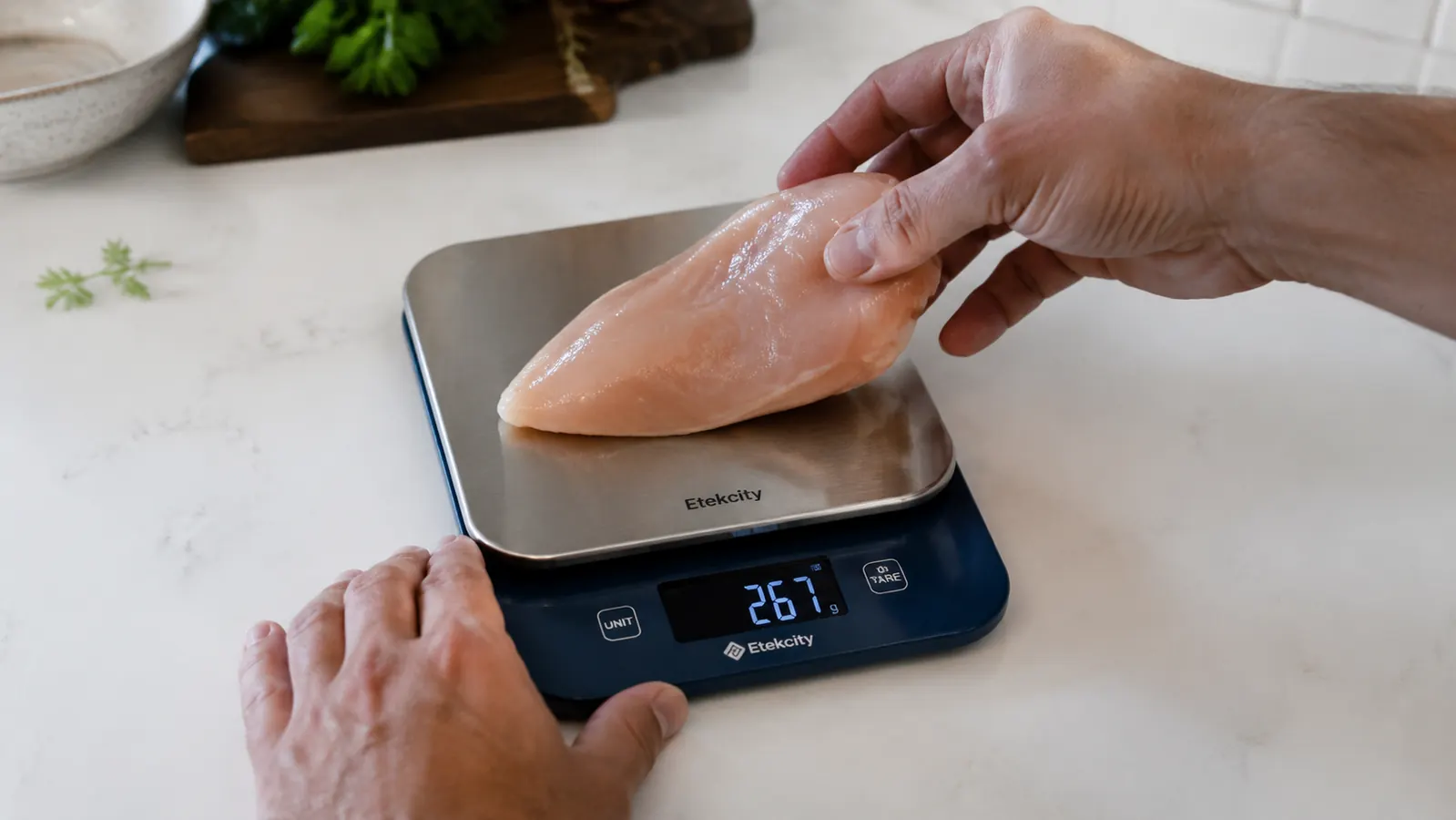
She told me to buy a kitchen scale. Not a fitness tracker, not a new meal plan, not a protein powder. A kitchen scale. I pushed back. I had been cooking for years. I knew what things looked like. She just shook her head.
I ordered the Etekcity Food Kitchen Scale that night. It cost me less than a takeout order. Four days later it arrived, and I set it on the counter feeling a little skeptical and a little embarrassed that I had never thought to try this before.
I had been cooking for years and I thought I knew what portions looked like. The scale showed me I was wrong on almost everything I was measuring by eye.
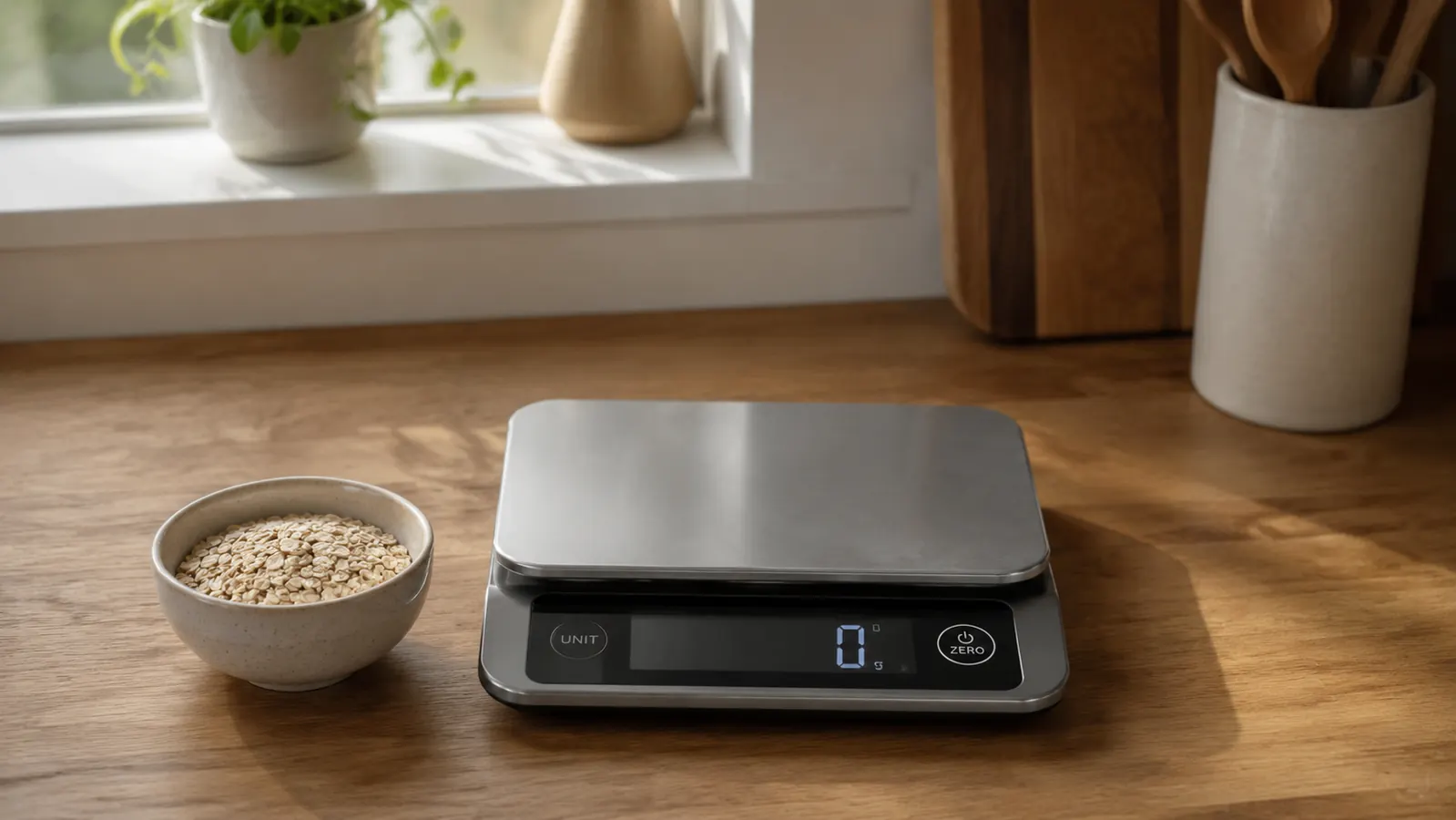
The first morning I weighed my oats. I always made "half a cup." On the scale, what I actually scooped was 87 grams. A real half cup of dry rolled oats is about 40 grams. I had been eating almost two servings and calling it one. That small bowl I thought was modest? Nearly double the calories I logged.
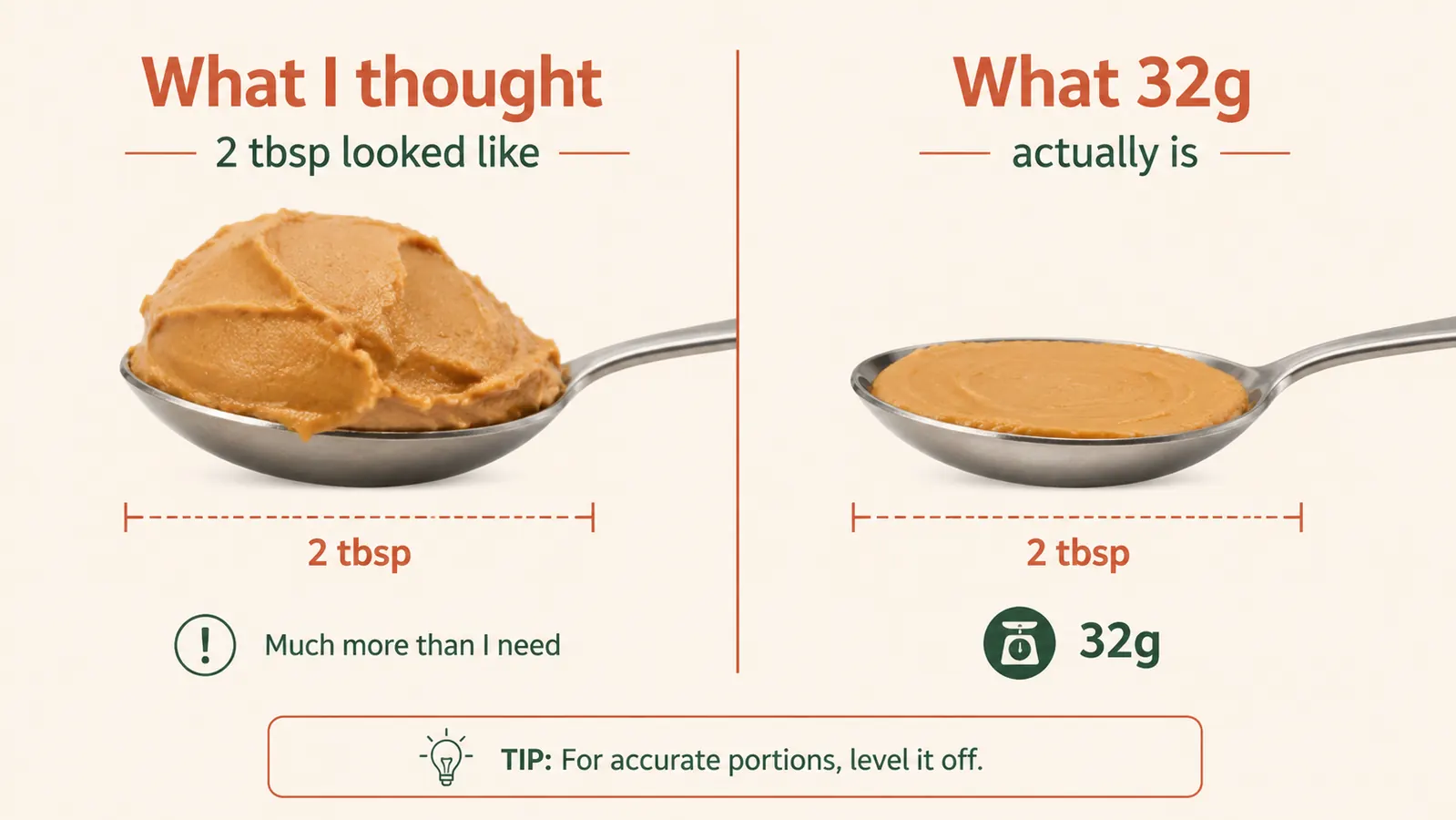
I did not panic. I just started weighing everything for two weeks, not to restrict anything, but to understand what I was actually eating. Olive oil was the next surprise. A "drizzle" in my skillet, measured, was 18 grams more than twice what I assumed. Nuts were even worse. I grabbed what felt like a small snack handful and it came out to 52 grams, 300 calories of almonds I had mentally logged as maybe 150.
The Etekcity scale itself is not complicated, which is exactly what I needed. It has a flat platform, a simple display, and a tare button that zeroes out the weight of whatever bowl or plate you are using. You can switch between grams and ounces with one press. It responds fast, it fits in a drawer, and the battery that came with it is still the one I am using. Nothing fancy. Just accurate and easy to use every single day.
Fourteen pounds started with a budget scale. Check today's price on Amazon.
The Etekcity kitchen scale has over 174,000 ratings and a 4.6-star average. It is the same scale I use every morning for oats, proteins, and portions. If your calorie tracking has felt off, this is almost certainly why.
Amazon Check Today's Price on Amazon →After about three weeks of weighing everything, something shifted. I was not hungry. I was not restricting myself or cutting out foods I liked. I was just eating the amount I thought I was already eating. The only thing that changed was I was right about it now instead of wrong. My total daily calories dropped by roughly 400 to 500, not because I changed what I ate, but because I measured what I actually ate.
Over the next four months I lost 14 pounds. I did not join a new gym. I did not buy a meal kit subscription or count macros obsessively. I cooked the same things I always cooked. I just weighed them. Every time I got a little careless and went back to eyeballing for a week, the progress slowed. Every time I picked the scale back up, it moved again.

I want to be honest here. A scale is not a magic fix and it is not a diet plan. It will not work if your food choices are the problem. But for me, and I suspect for a lot of people who think they are tracking accurately, the issue was never willpower or the wrong foods. It was that the gap between what I assumed a portion was and what it actually weighed was enormous, and that gap compounded quietly over months and years.
What I Would Tell You If We Were Sitting at My Kitchen Table
If a friend came to me and said they were eating well but not seeing any results, the first thing I would ask is whether they use a scale. Not whether they eat clean. Not whether they work out enough. A scale. Because the eyeballing problem is not about laziness or bad intentions. It is about the fact that human beings are genuinely terrible at estimating portion sizes, and the foods that tend to get underestimated the most are the calorie-dense ones we love: nut butters, oils, cheese, grains, protein portions.
You do not have to weigh every meal forever. After about two months of consistent weighing I developed a much more accurate visual sense of real portions, which is actually the goal. The scale trains your eye. But in those first few weeks, when you are surprised by almost everything you measure, you are learning something valuable that no app or diet article can teach you. You are seeing the truth about what you actually eat.
If you want to dig deeper into the Etekcity scale itself before buying, I wrote up a full year of use in the long-term review here. And if you are still on the fence about whether a kitchen scale is worth the drawer space, the 10 reasons it transforms home cooking might change your mind the way my friend's one question changed mine.
If your portions have been off, this is how you find out for sure.
The Etekcity scale costs less than most takeout meals and takes up about as much space as a paperback book. It reads in grams, ounces, and milliliters, zeroes out instantly with the tare function, and it just works. No fuss, no subscription, no app required. Just accurate numbers every time you step into the kitchen.
Amazon Check Today's Price on Amazon →