
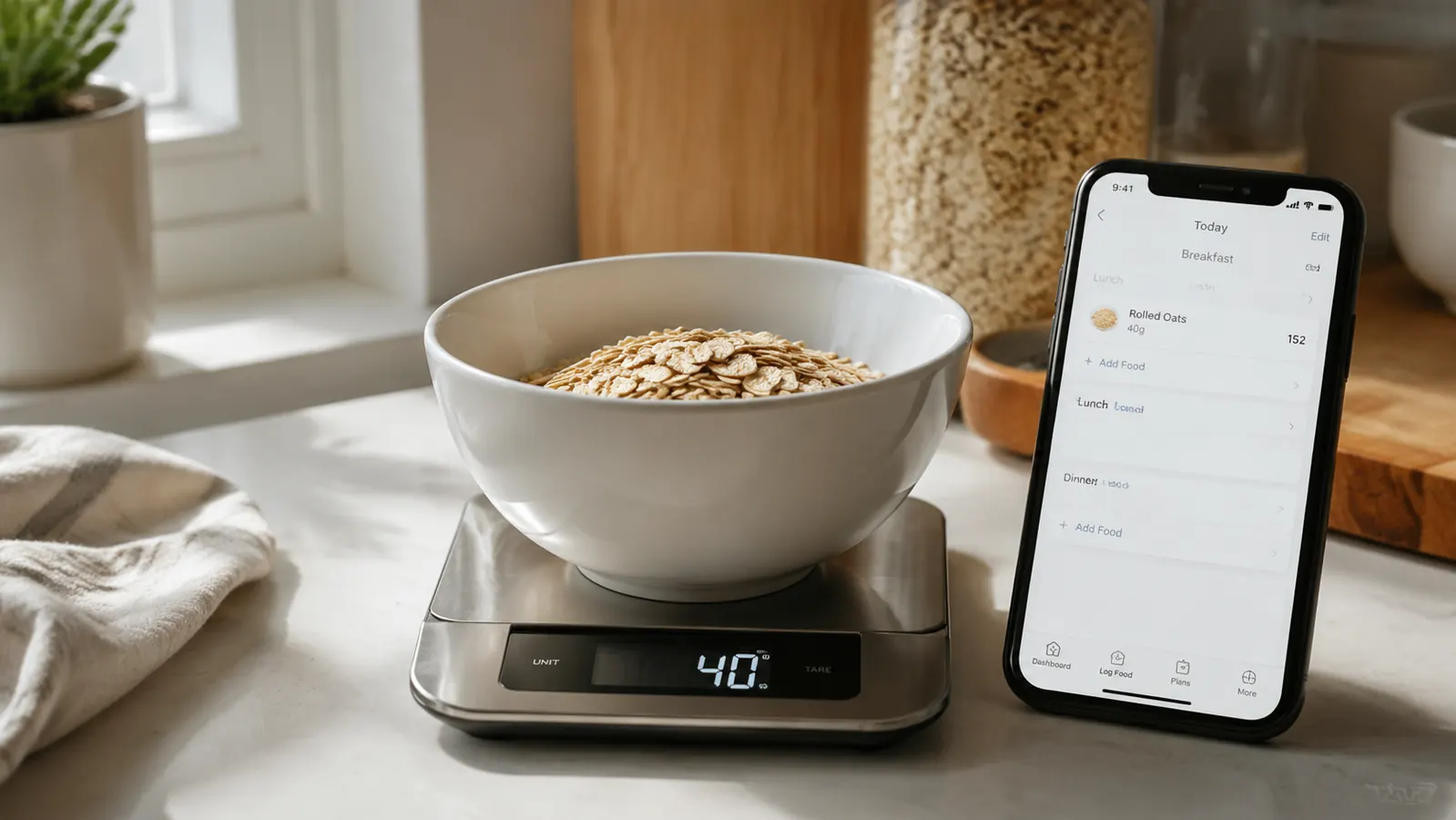
I tracked macros for three months and got nowhere. I was logging every meal, hitting my targets on paper, and wondering why nothing was changing. Then I weighed a tablespoon of peanut butter the same way I always scooped it and found out I had been eating about 2.5 tablespoons every single time. The Etekcity kitchen scale is what finally made my food log honest. Once I started weighing instead of estimating, my numbers became real and the results followed.
Macro tracking fails for most people not because they chose the wrong app or the wrong targets. It fails because measuring cups and eyeballing have margins of error that wreck even a well-designed plan. A digital kitchen scale removes the guesswork. This guide walks you through the exact process, step by step.
Your macro app is only as accurate as your measurements. Start weighing right.
The Etekcity Food Kitchen Scale reads in grams and ounces, has a tare function for bowl subtracting, and costs less than a single restaurant meal. It is the tool this entire guide is built around.
Amazon Check Today's Price on Amazon →Why Measuring Cups Cannot Do What a Scale Does
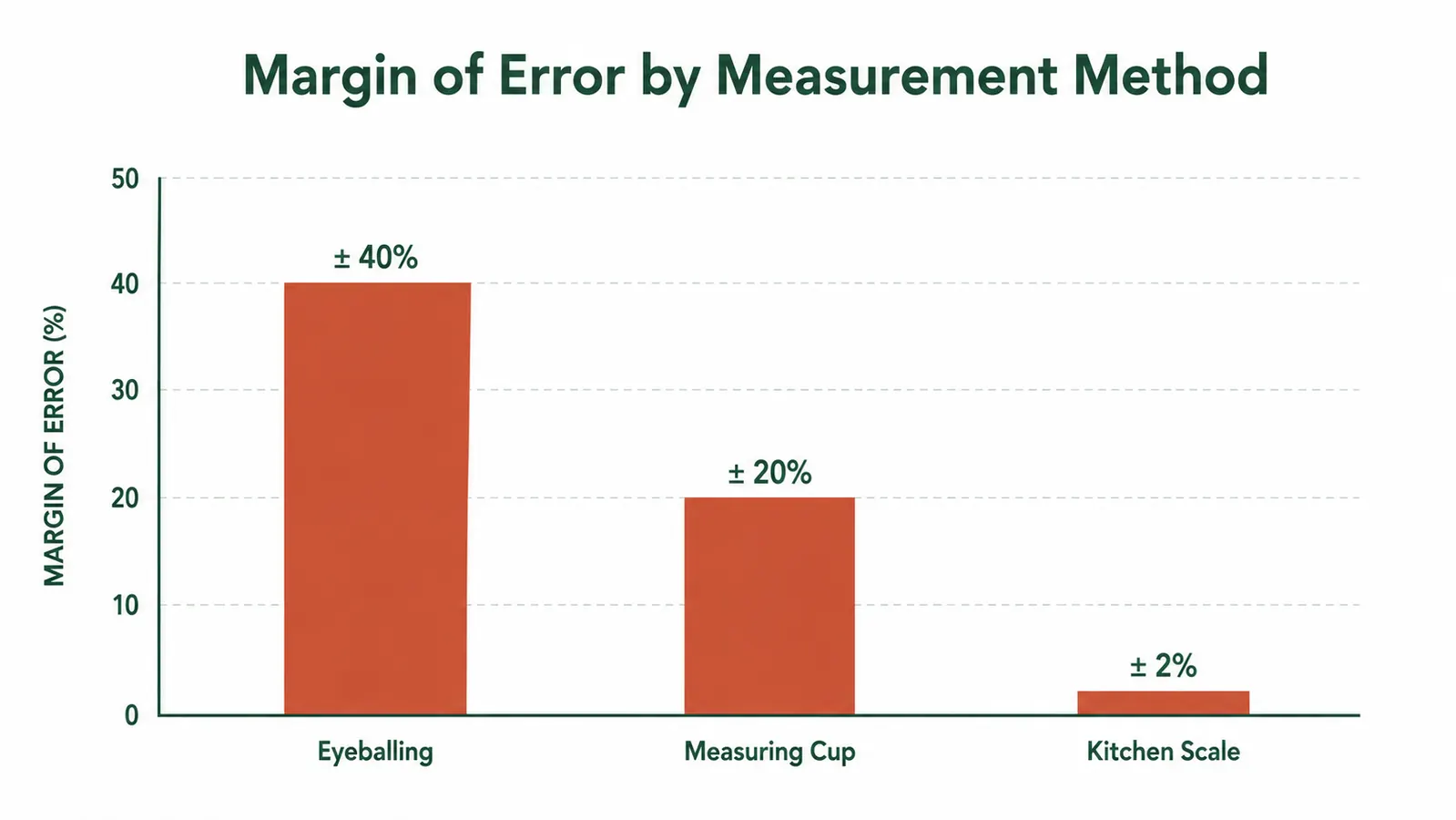
A measuring cup measures volume. Macros are calculated by weight. These are not the same thing, and the gap between them is where your tracking falls apart. A cup of oats can weigh anywhere from 80 to 110 grams depending on how compressed it is. A cup of shredded chicken can range 30 grams in either direction based on how tightly you packed it. When the food database entry says '100 grams of rolled oats,' it means 100 grams, not one cup. Measuring cups introduce a variable you cannot control.
Eyeballing is even less reliable. Research consistently shows that people underestimate portions by 20 to 40 percent, and that error compounds across every meal, every day. A 200-calorie daily undercount looks small. Over a week it is 1,400 calories of unlogged food. That is real food that is real fuel affecting real results, and it never shows up in your app.
A digital scale reading in grams solves this at the source. Grams are precise, repeatable, and universal. Every food database entry, every nutrition label, and every macro calculator uses weight. When you weigh in grams you are speaking the same language as your food log. The Etekcity scale reads to 0.1-gram precision, which is tighter than any measuring cup on the market.
Step 1: Set Your Scale to Grams and Only Grams
Press the unit button on the Etekcity until the display shows 'g' for grams. That is the only unit you need for macro tracking. Ounces are imprecise at small quantities. Milliliters are for liquids only. Grams give you the finest resolution and map directly to what is in your tracking app.
Get in the habit of checking this before every weigh-in. If someone else uses the scale for baking they may have switched it to ounces. A quick glance at the display saves you from logging a gram number that was actually ounces and wondering why your protein looks impossibly high. Thirty seconds of habit prevents a bad data day.
One practical note: the Etekcity auto-powers off after two minutes of inactivity to save the battery. If you are assembling a multi-ingredient meal in stages, press the power button to wake it between additions rather than trying to rush. The tare memory holds between wake cycles, so you will not lose your running total.
Step 2: Use the Tare Function to Weigh Directly in Your Bowl
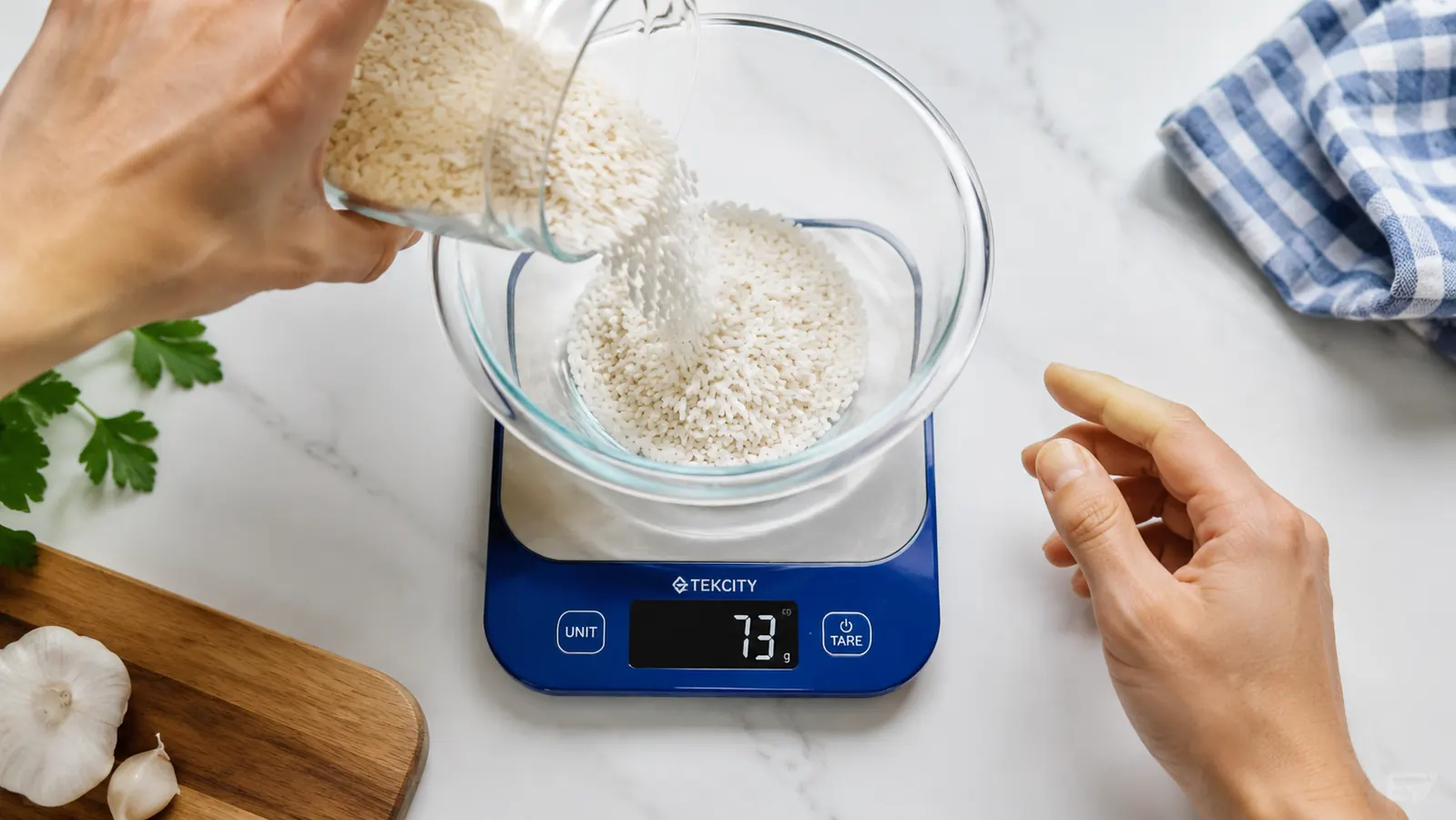
Place your bowl, plate, or container on the scale and press the tare button. The display drops to zero. Now whatever you add to that container is the only weight the scale counts. You are not logging the bowl, you are logging the food. This sounds obvious but it is the feature that makes scale-based tracking genuinely fast and practical.
Add your first ingredient, read the weight, log it in your app, then press tare again. The display resets to zero while your ingredient stays in the bowl. Add the next ingredient, read, log, tare again. You can build an entire mixed meal in one bowl on one scale and log each component separately without ever dirtying a second dish or doing subtraction math in your head. This is the tare-and-add method, and it is the workflow that makes daily weighing stick as a habit.
For sauces, dressings, and liquids, use a small ramekin or measuring cup as your tared vessel. Do not try to pour olive oil directly onto the plate and guess at splatter. Put a ramekin on the scale, tare it, drizzle in the oil, read the grams, log it, and pour it over your food. Four seconds of extra effort gets you an accurate fat count instead of a guess.
Step 3: Weigh Raw, Not Cooked
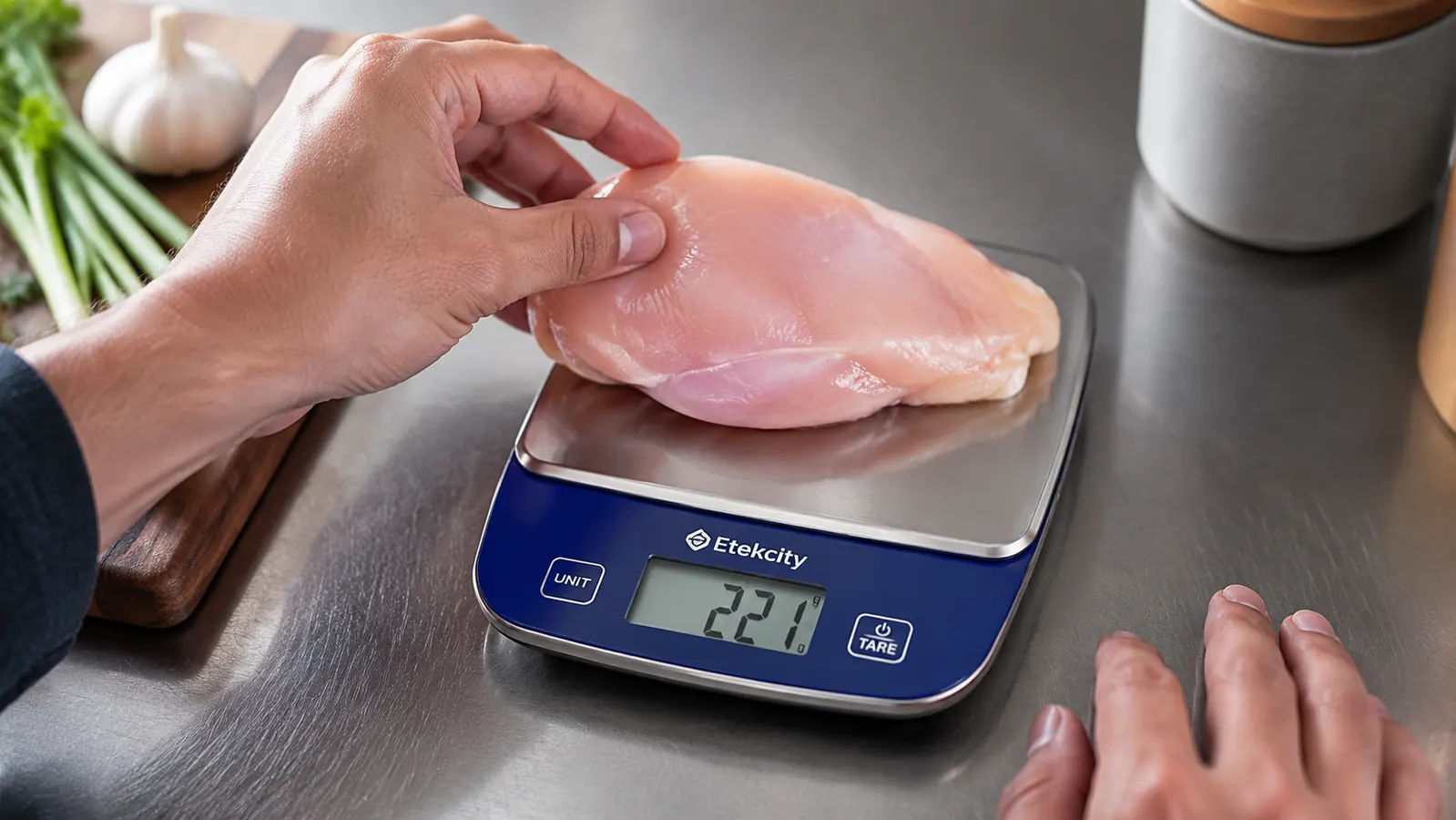
This is the step most people skip, and it is the one that introduces the biggest error. Chicken breast loses roughly 25 percent of its weight when cooked as moisture evaporates. If you weigh 200 grams of raw chicken, cook it, and then enter '200 grams cooked chicken breast' in your app, you are logging the wrong entry. The database entry for cooked chicken reflects the cooked weight. The entry for raw chicken reflects the raw weight. Mix them up and your protein is off by a meaningful margin.
The simplest rule: weigh the food in whatever state the database entry describes. If the entry says 'raw chicken breast,' weigh it raw. If it says 'cooked chicken breast,' weigh it cooked. Most whole foods, grains, and legumes have both entries available in major tracking apps. Choose the one that matches when you are at the scale. Raw is generally easier for meal prep because you are portioning before cooking anyway.
For batch cooking, weigh the total raw weight before cooking, then weigh the cooked batch and calculate a cooked-to-raw ratio. Example: 800 grams raw chicken, 600 grams after cooking. Every 100 grams of cooked chicken came from 133 grams raw. Log your cooked portions in grams using the cooked entry and your numbers stay accurate across the whole batch.
Once you start weighing instead of estimating, your food log stops being a creative writing exercise and starts being actual data.
Step 4: Handle Multi-Ingredient Meals Without Losing Your Mind
Complex meals with four or more ingredients look intimidating in a macro tracker but the Etekcity's tare function handles them cleanly. Set up your largest cooking container on the scale, tare it, and work through ingredients one at a time using the tare-and-add method from Step 2. Keep your phone or a notepad beside the scale and log each ingredient as you add it before pressing tare for the next one. Do not try to hold the numbers in your head. Log immediately, every time.
For recipes you cook regularly, save them as a custom recipe in your tracking app after weighing each ingredient once. The second time you make the dish you open the saved recipe, enter your portion size, and the app handles all the macro math. This investment pays back every single time you make that meal. A meal you cook twice a week becomes a one-tap log by week two.
Meals from restaurants or other households are the one place where scale tracking gets complicated. For these, use the closest matching entry in your app, eat a similar portion to your usual servings, and do not stress the precision. Home cooking is where you have control. That is where you use the scale and get accurate. Restaurant meals are noise, and treating them as such protects your habit from perfectionism paralysis.
Step 5: Build a Weekly Weigh-Calibration Routine
Kitchen scales can drift slightly over time, especially budget models that get daily use. The Etekcity is accurate and consistent, but it is worth checking calibration every few weeks with a known weight. A standard weight set is the clean option. A more practical option: a sealed 500-gram bag of dry pasta or a full 16-ounce can of beans. Weigh it, note the number, and compare it the next time you check. If the reading shifts by more than 2 to 3 grams consistently, recalibrate using the scale's calibration mode or replace the battery first since low battery is the most common cause of drift.
Beyond calibration, build a weekly habit of auditing two or three foods you eat most often. Re-weigh your typical serving of oats, your usual protein portion, your go-to fat source. Compare to what you have been logging. People develop small rounding habits over time, adding a few grams here and skimping there, and those habits accumulate into inaccuracy just as quietly as measuring cups did. The audit takes three minutes and keeps your data honest.
Keep the scale on the counter, not in a cabinet. Out of sight is out of mind for kitchen tools. The Etekcity's slim profile means it takes up very little counter real estate and does not become the kind of clutter that earns its way back into the drawer. Visibility equals use. The best scale habit is the one that does not require a decision every time you cook.
What Else Helps
A kitchen scale does the measurement. Your tracking app does the math. Choosing one app and sticking with it matters more than which specific app you pick. Switching apps mid-diet means re-entering custom recipes, losing historical data, and re-learning a new interface right when you need consistency most. Pick one, learn it, stay with it for at least three months before evaluating whether to change.
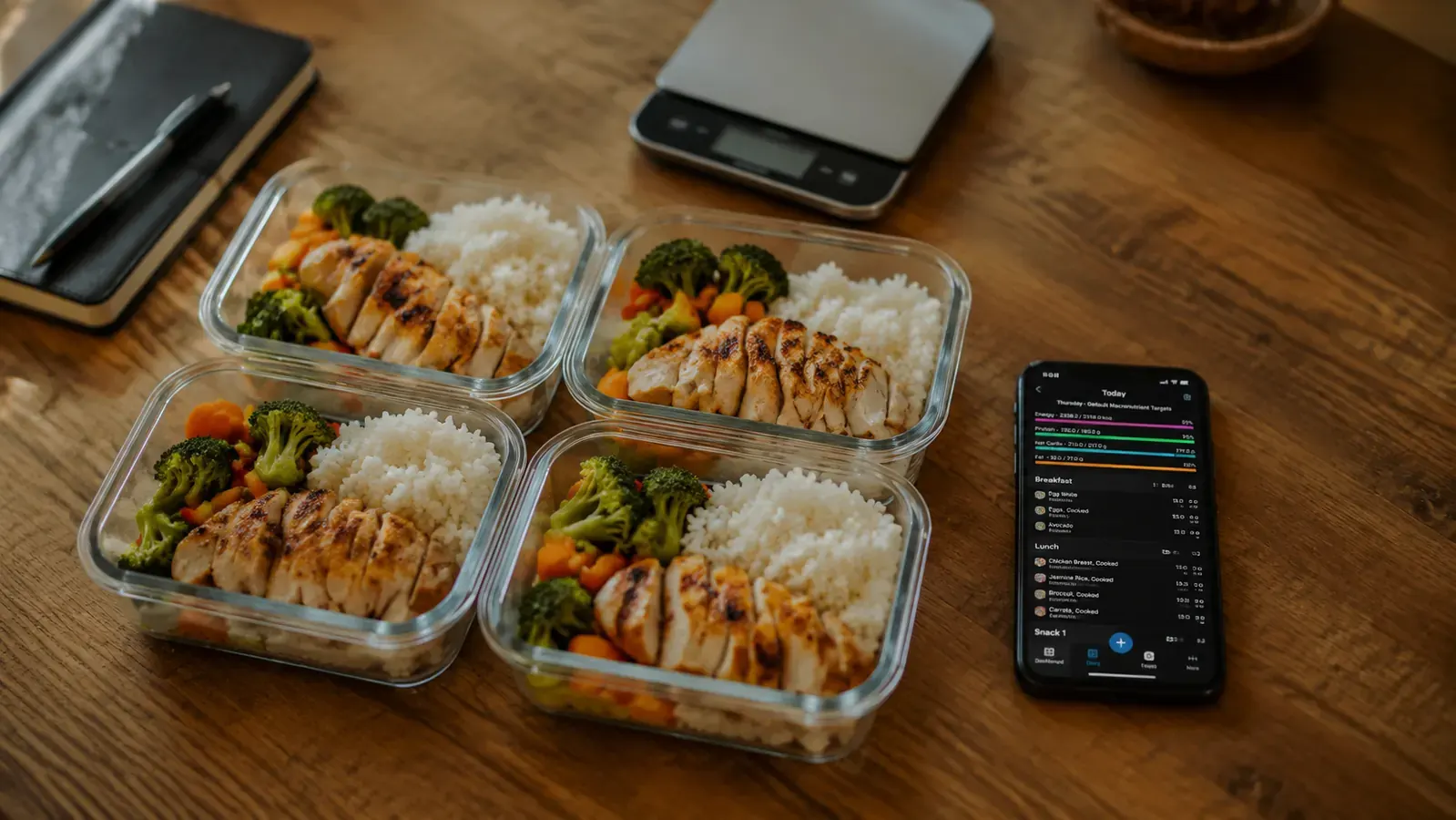
Meal prepping on Sundays is the habit that makes daily weighing sustainable. When you weigh and log once per batch instead of once per meal, you cut your total tracking time to about 20 minutes a week. Portion cooked food into containers by weight so each container is already a known serving. Open the fridge, grab a container, log the meal you already know the macros for. That is the low-friction version of macro tracking that people actually maintain long term.
For articles with more detail on this scale's long-term performance, see the Etekcity kitchen scale review after one year of daily use. If you are still deciding whether a scale belongs in your kitchen at all, 10 reasons a kitchen scale transforms how you cook covers the full case for adding one.
The scale is not the hard part. The hard part was deciding to stop guessing. Once you make that call, the Etekcity is just a tool that does its job every single time.
Ready to make your food log worth reading? The scale that makes it possible costs less than your last grocery run.
The Etekcity Food Kitchen Scale is what this entire workflow runs on. Accurate to 0.1 grams, tare function for bowl-and-add portioning, easy unit switching, and long battery life. Check today's price and see why it has over 174,000 reviews.
Amazon Check Today's Price on Amazon →