
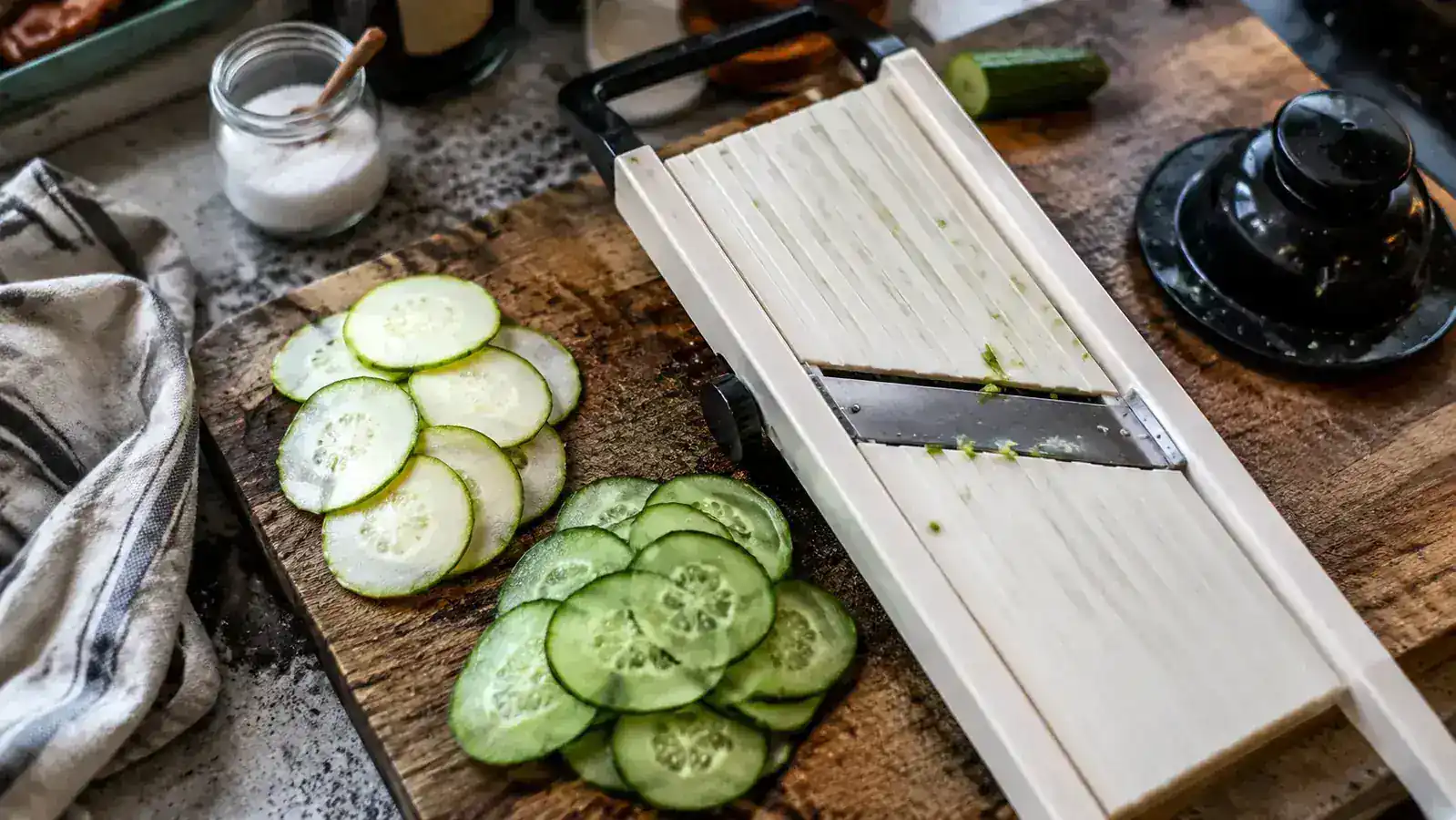
I cut myself the fourth time I used this thing. Not badly, not blood-everywhere badly, but enough to make me set it down, go find a bandage, and reconsider whether I was the problem or the product was. That question is actually the most useful one I can answer for you before you buy the Mueller Pro-Series Mandoline Slicer.
Nearly 40,000 Amazon reviewers have weighed in on this slicer. The 4.5-star rating is not dishonest. The slicer genuinely does what a mandoline is supposed to do. But reviews tend to cluster around first impressions: box arrived, blade is sharp, slices look great. They do not cluster around the third month when the julienne blade starts dragging, or the Sunday afternoon when you realize you cannot get the beet stain out of the blade housing without a toothbrush and patience you do not have. That is what this review is about.
The Quick Verdict
A capable slicer for patient, careful cooks who prep frequently, but the guard design is genuinely underdeveloped and two of the 12 blades dull faster than they should at this price point.
Amazon Check Today's Price →If you cook fresh vegetables at least four times a week, the Mueller still earns its spot. Check whether it is in stock at today's price.
The Mueller Pro-Series comes with 12 blade inserts, a hand guard, a food catch container, and a blade storage box. It is not perfect. For the right cook, it is still a strong buy.
Amazon Check Today's Price on Amazon →The Safety Issue Nobody Mentions Up Front
A mandoline has an exposed razor-sharp blade. That is the whole point. The blade needs to be sharp to do the job, and because it is set in a flat frame rather than enclosed like a food processor, your fingers are always close to it. The Mueller hand guard is the only thing standing between you and a trip to urgent care, and here is the honest truth: it is awkward.
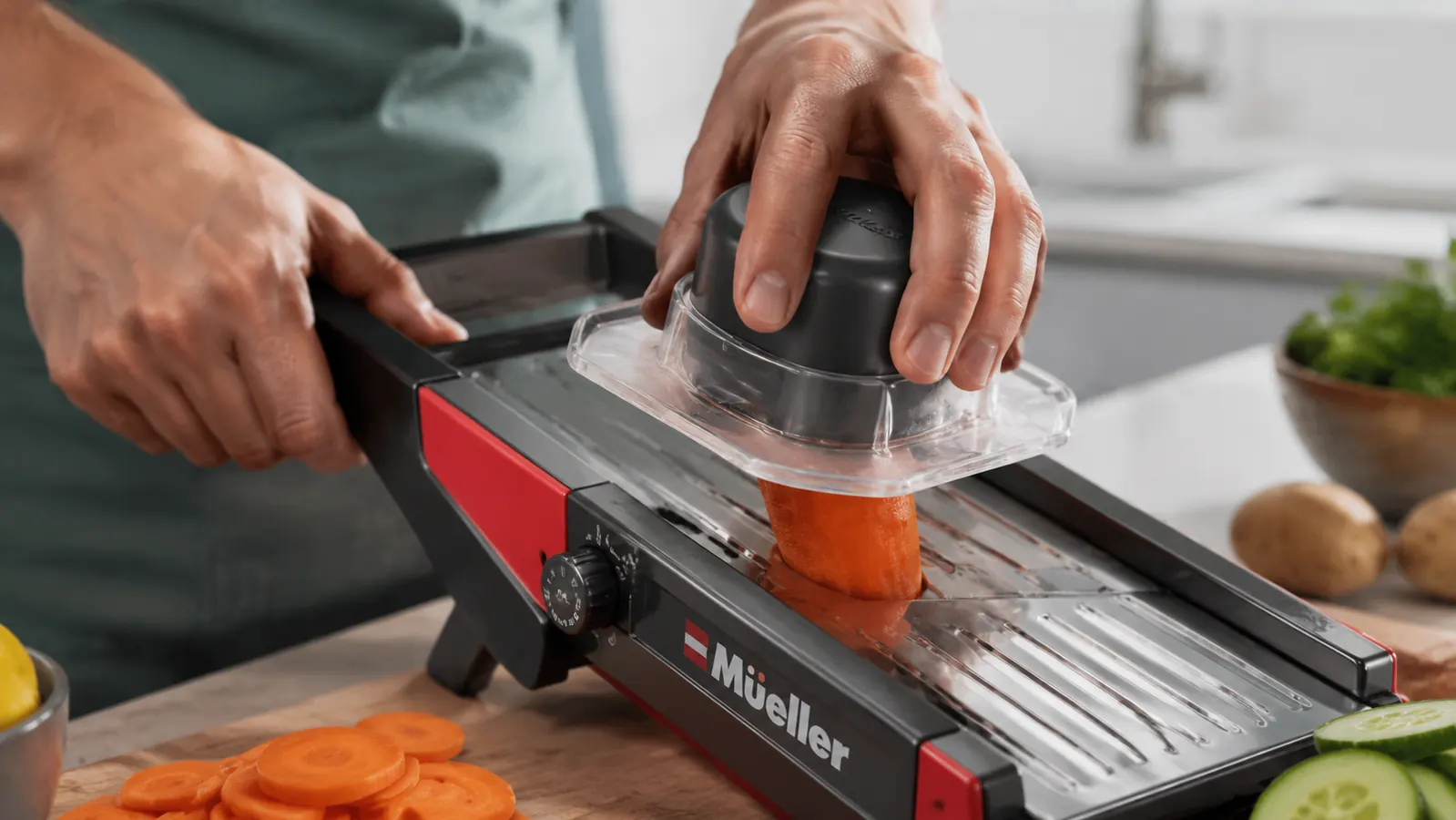
The guard is a plastic frame with short food-gripping prongs on the bottom. It works acceptably when you have a large, firm vegetable, something like a full zucchini or a whole potato. As the food gets smaller, the guard becomes less useful because the prongs cannot grip a two-inch cucumber stub the same way they grip a full carrot. At that point you have two choices: switch to a cut-resistant glove (which I now do every single session) or stop before the vegetable gets small and hand-slice the remainder with a knife. Both are fine workarounds. Neither is mentioned in the product listing.
I want to be specific about my cut: I was trying to finish a small fennel bulb without a glove, the guard slipped, and the tip of my index finger grazed the flat blade. It was a surface graze, not a deep cut. But mandoline injuries in home kitchens are extremely common, and if you look at the one-star reviews on this product, a significant share of them are from people who hurt themselves. That pattern is worth taking seriously. A glove costs very little on Amazon and removes the vast majority of that risk. The fact that Mueller does not include one in the box, and does not prominently recommend purchasing one in the setup instructions, is a real gap in the product experience.
The guard works fine on large produce. It stops working well before the vegetable is actually gone. A cut-resistant glove is not optional, it is required equipment.
Which Blades Actually Hold Their Edge (and Which Don't)
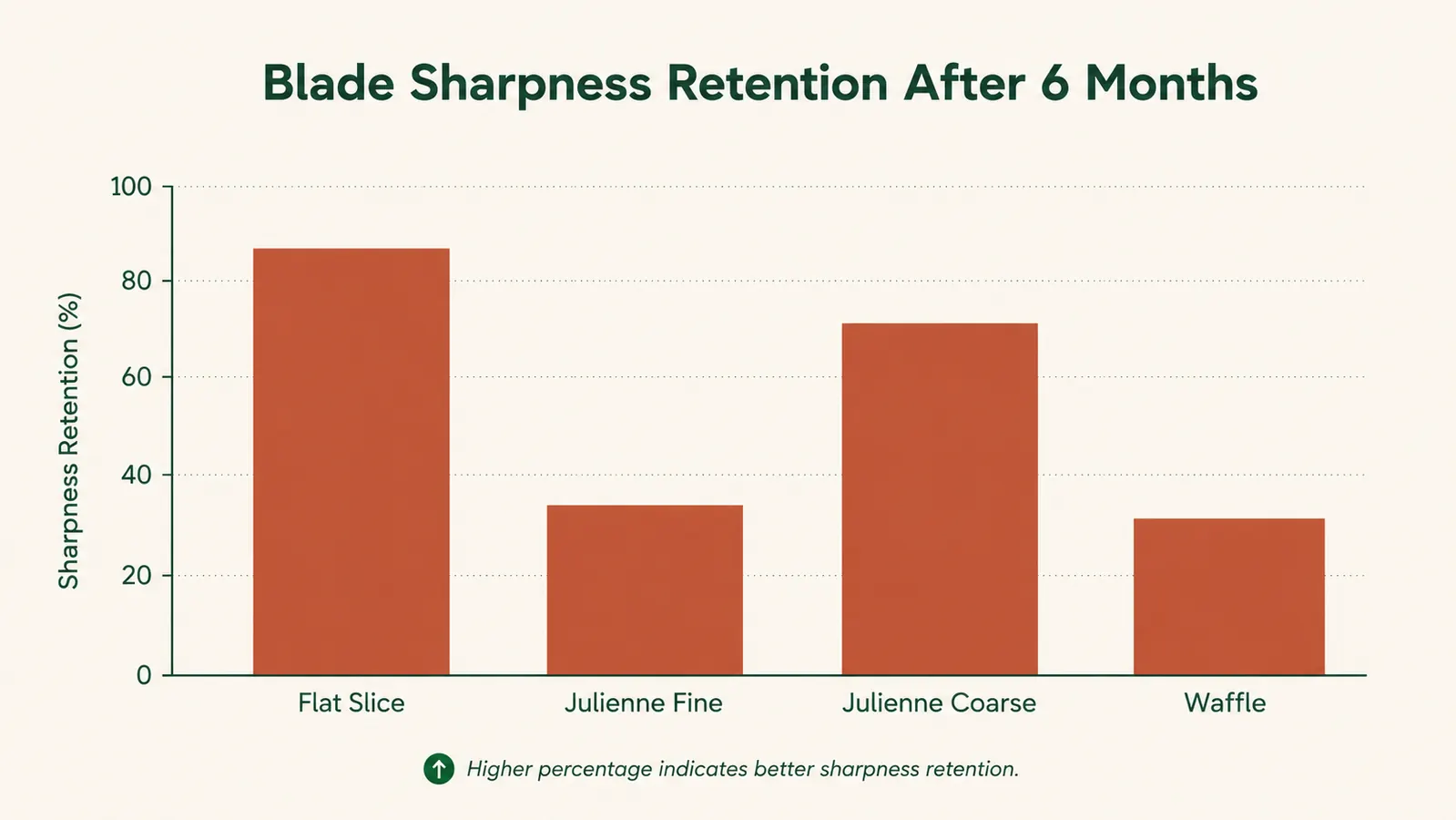
Twelve blades sounds like a lot. Realistically, most cooks use three or four of them regularly: the flat slicer at various thickness settings, one julienne size, and occasionally the waffle or crinkle blade. The flat slicer holds up very well. After six months of regular use, mine still cuts paper-thin potato slices without tearing. That blade earns the positive reviews.
The fine julienne blade is a different story. It creates the thin matchstick cuts that look beautiful in salads and stir-fries. It also seems to dull faster than the other inserts, probably because the narrow cutting teeth take more stress per pass than the flat blade edge. By month three, I noticed it dragging on firm carrots rather than cutting cleanly. It still worked, but the cuts were rougher and the resistance was noticeably higher. This is not unique to Mueller, fine julienne blades on almost every mandoline at this price point have the same limitation. But knowing it ahead of time means you are not wondering if you bought a defective unit.
The waffle blade is genuinely fun for the first few uses. It is also the one most people pull out to impress guests once and then never use again. If waffle-cut fries or cucumber rounds are a weekly thing for you, factor in that this blade will need replacement faster than the others. Mueller does sell replacement blade sets, which is worth knowing before you buy. If the julienne or waffle inserts are the reason you want this slicer, budget a few extra dollars for a replacement set within the first year.
The Cleaning Situation Is Worse Than You Expect
Mandolines are inherently annoying to clean. That is not a Mueller problem specifically, it is a category problem. But I want to prepare you for exactly what annoying means here, because the Amazon listing calls this dishwasher-safe and that framing can create the wrong expectation.
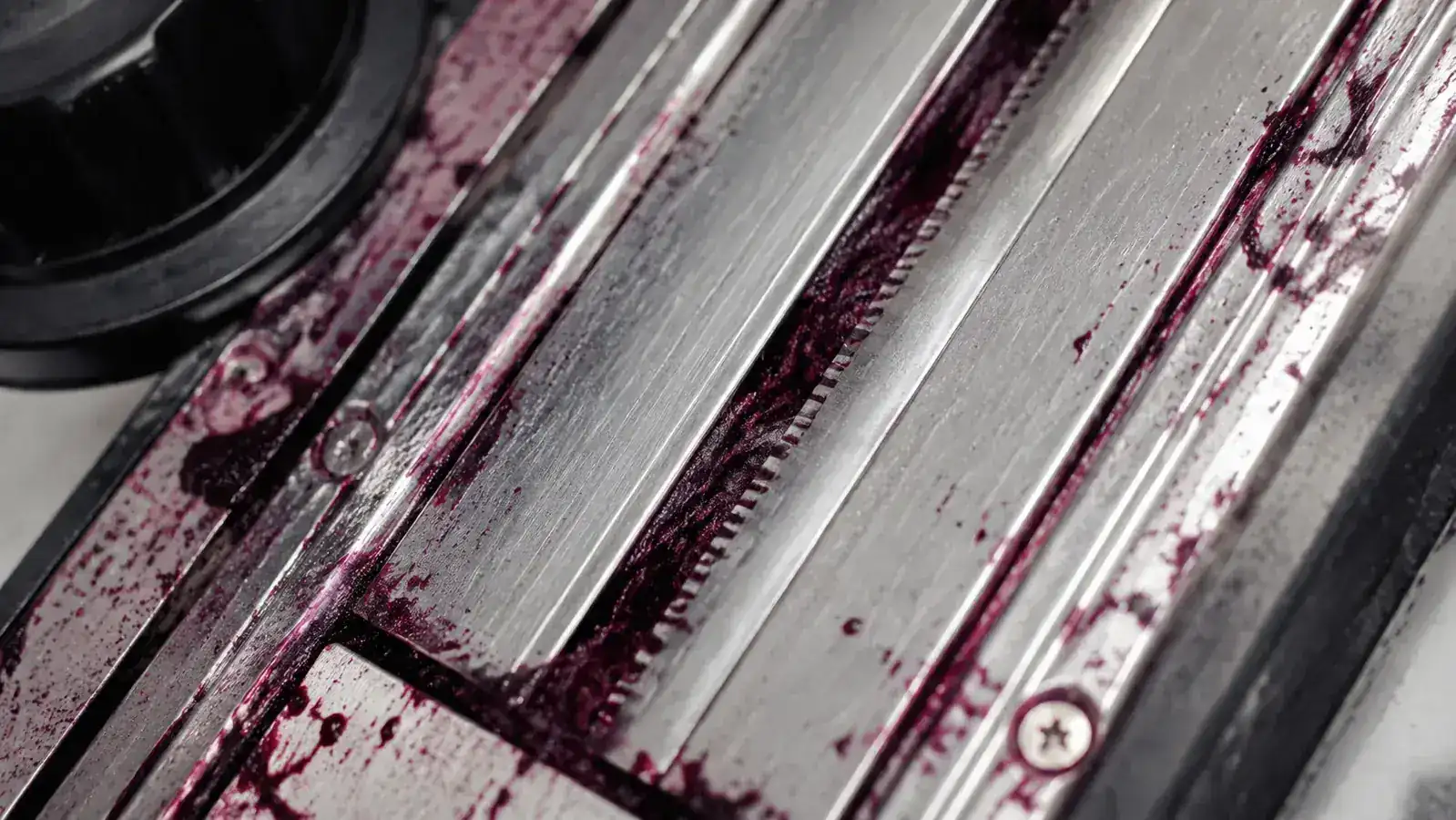
Yes, the frame and blade inserts are technically dishwasher-safe. The issue is that food fibers, especially from beets, fennel, ginger, or anything stringy or pigmented, pack into the tiny slots around the blade edges and around the frame teeth. A dishwasher cycle loosens most of it, but not all of it. After a beet-slicing session, I consistently found residue in the narrow gaps that the dishwasher did not reach. I started using a small silicone brush and running water while holding the frame away from me, because cleaning a mandoline under a running tap with the blade facing you is another way to catch a nick. My actual routine is: rinse immediately after use before anything dries, use the brush on the blade housing, then let it air dry before boxing the inserts. It takes about four minutes. That is four minutes you should plan for, not a quick rinse and done.
The blade storage box that comes with the set is a genuinely good idea. It keeps the inserts separated, protects the edges, and means you are not fishing sharp blades out of a drawer blindly. The frame itself, once cleaned, stores flat and does not take up much space. So storage is not the problem. Cleaning is the tax you pay for using this tool, and it is a real tax, not a quick rinse.
Who Should Not Buy This Slicer
I think honest reviews owe you a clear answer to this question. Most reviews tell you who the product is for. Very few tell you who it is not for, and that is often the more useful information.
Skip this if you cook in a rush. A mandoline demands your full attention every single pass. If your kitchen style is multitasking while dinner comes together, an exposed blade that requires two-handed focus is a bad fit. A sharp chef's knife and a few extra minutes is the safer choice for distracted cooks.
Skip this if you are not going to buy a cut-resistant glove alongside it. The glove costs very little and removes most of the injury risk. If you are not willing to add that to your routine, the guard alone is not sufficient protection for small or irregularly shaped produce.
Skip this if you only need it for one task a month. Mandolines reward frequent use. If you are buying it for one holiday potato gratin and then it goes in a cabinet, you are better off using a sharp knife or buying a cheap single-blade slicer that is simpler to set up and put away.
Skip this if cleaning friction genuinely derails your cooking habits. Some people will not use a tool again if it is annoying to clean. Know yourself. If you are already the person who lets pots soak for a day because scrubbing is tedious, a mandoline will end up unused on a high shelf.
What I Changed After Getting Cut
After that fourth-use nick, I made three changes and have not had a problem since. First, I bought a level-5 cut-resistant glove and put it on before I even take the mandoline out of the cabinet. Not halfway through the session when the produce gets small. Before I start. Second, I set a personal rule: when a piece of produce gets shorter than my fist, I stop slicing it and hand-chop the rest. That stub goes in a soup or a stir-fry where uniformity does not matter. Third, I never use this while tired or distracted. That sounds obvious, but if it is 6:45pm and I am trying to get dinner on the table while also helping with homework, I put the mandoline away and use a knife. The slicer has a specific use case: deliberate, focused prep at the start of a cooking session.
These adaptations are not complicated. But they do reveal something important about the product: the Mueller mandoline is not a forgiving tool. It rewards users who approach it with respect and a clear process. If you treat it like a can opener you grab without thinking, you will eventually hurt yourself. That is not unique to Mueller, it is true of every mandoline. But given that this is a mass-market product with beginner-friendly marketing, I wish the setup instructions reflected that reality more directly.
Why I Still Recommend It for the Right Cook
After all of that, here is where I land: the Mueller Pro-Series is a genuinely good tool for people who prep vegetables consistently, work deliberately, and treat the guard plus a cut-resistant glove as non-negotiable safety equipment.
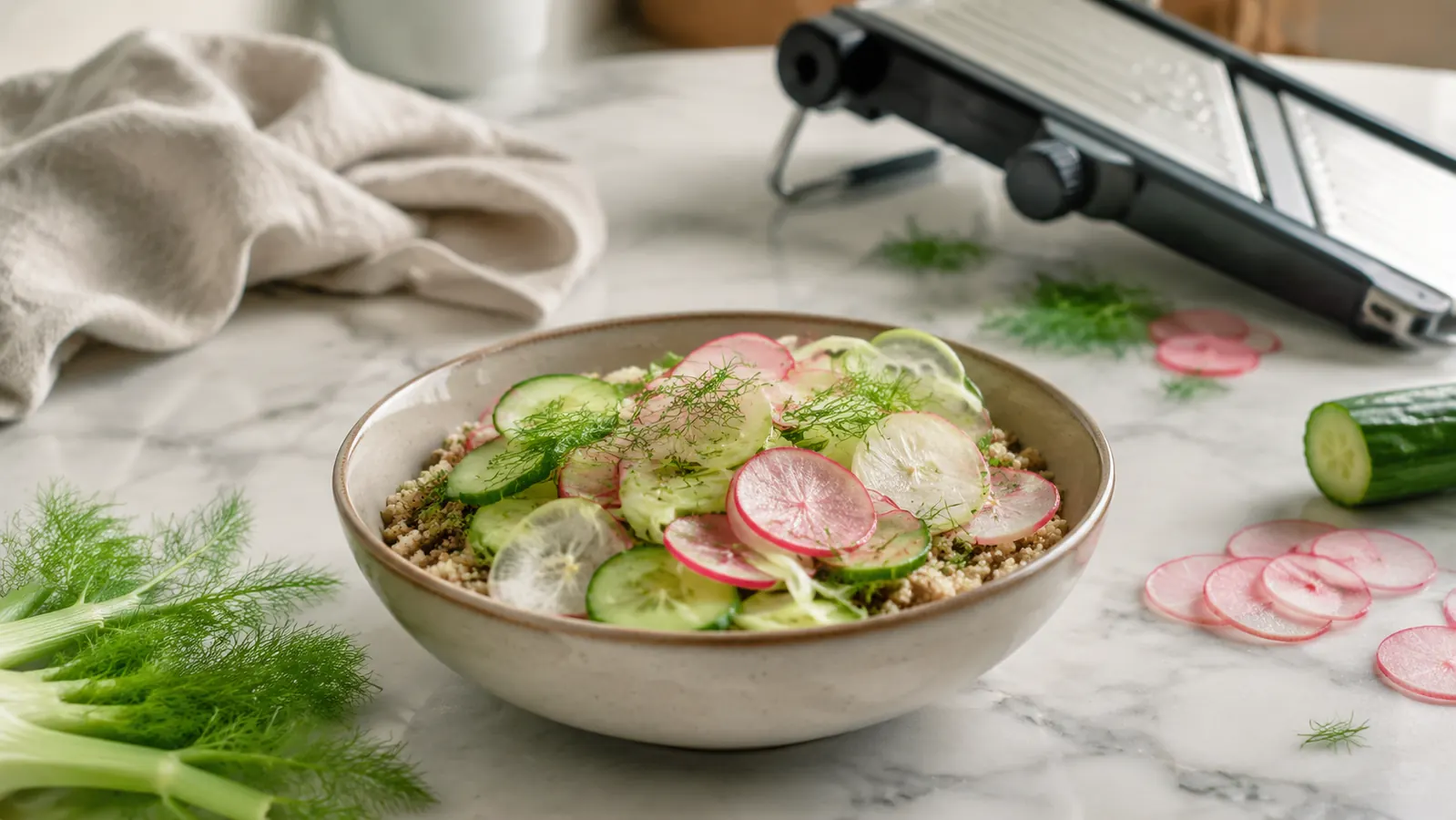
The flat slicer blade produces consistent, thin cuts that a knife cannot reliably replicate without considerable skill and time. For weekly salads with shaved fennel, cucumber, or radish, for homemade potato gratin with uniform layers, for zucchini ribbons in summer pasta dishes, this slicer shortens prep time in a meaningful way. That is not marketing language, it is the actual functional value of the tool.
The 12-blade set gives you flexibility even if you end up using four of them regularly. The thickness adjustment knob clicks into place and stays there without drifting mid-session. The catch container underneath keeps slices from scattering across the counter. The blade storage box is a genuinely good design choice that keeps the inserts from rattling loose and getting chipped. These are not small things.
At this price point, you are not going to find the build quality of a Benriner or a professional Bron. Those cost four to eight times more. What you are getting is a capable home-kitchen mandoline that will perform well for years if you treat it as a deliberate prep tool rather than a quick-grab shortcut. The people who love this product are the people who went in with accurate expectations. That is what this review is trying to give you.
What I Liked
- Flat slicer blade stays sharp through consistent long-term use
- Thickness adjustment knob clicks and holds position reliably
- Catch container keeps prep clean and slices contained
- Blade storage box protects inserts and eliminates blind-drawer digging
- 12 blade options cover nearly every slicing and julienne cut a home cook needs
- Compact storage footprint when not in use
Where It Falls Short
- Hand guard loses effectiveness with small or irregularly shaped produce
- Fine julienne and waffle blades dull noticeably faster than the flat slicer
- Cleaning requires more than a dishwasher cycle for pigmented or fibrous produce
- No cut-resistant glove included despite the blade risk
- Requires focused, deliberate use, not a fit for rushed or distracted cooking sessions
Read These Next
If you want to see how the Mueller compares directly against the OXO handheld slicer, the comparison covers price, build, and which one fits different cooking styles side by side. That article is at Mueller Mandoline vs OXO Handheld Slicer. If you want a step-by-step guide on using a mandoline safely before you commit to buying one, the technique guide at how to prep vegetables faster with a mandoline slicer covers guard technique, glove setup, and exactly when to stop using the slicer and switch to a knife.
The Bottom Line
The Mueller Pro-Series earns its rating from people who use it correctly. It does not earn a perfect score because the guard design is genuinely insufficient for small produce, two of the blades dull faster than the rest, and cleanup is a real commitment, not a quick rinse. None of those are dealbreakers if you go in knowing about them. All of them are surprises if you do not.
Buy it if you prep vegetables at least three or four times a week, you are willing to pair it with a cut-resistant glove, and you cook with focus rather than while managing five other things. Avoid it if any of those conditions do not apply to you. That is the honest version of a 4.5-star review.
Still the right call for focused, frequent prep cooks. See today's price and what is currently in stock.
The Mueller Pro-Series Mandoline Slicer is available on Amazon with the full 12-blade set. Pair it with a cut-resistant glove (sold separately) and it becomes a genuinely useful daily prep tool for health-focused home cooks.
Amazon Check Today's Price on Amazon →