

Let me tell you something that took me longer to admit than it should have. A scale with 174,000 reviews and a 4.6-star average is not guaranteed to be the right scale for you. Crowd consensus on Amazon tells you a product is popular and mostly inoffensive. It does not tell you about the three specific situations where it will frustrate you, the one design decision that makes daily use slightly harder than it needs to be, or the type of cook who should honestly just spend a little more. I have had the Etekcity food scale on my counter for months now, and I want to give you the version of this review that the star rating skips over.
This is not a teardown. The Etekcity scale earns its place in most kitchens, and I will tell you exactly why by the end. But first, I want to go through the parts nobody talks about, because if any of them apply to your cooking style, you deserve to know before you click buy.
The Quick Verdict
A genuinely capable budget scale that handles everyday weighing cleanly, but the ounce-mode rounding, narrow platform, and 1g minimum increment will bother precision cooks more than casual ones.
Amazon Check Today's Price →174,000 reviews got one thing right: the price is hard to argue with.
If you cook at home regularly and need consistent, accurate measurements without spending premium money on a high-end scale, the Etekcity is the honest starting point. Check today's price before reading further.
Amazon Check Today's Price on Amazon →The Ounce-Mode Problem Most Reviews Completely Ignore
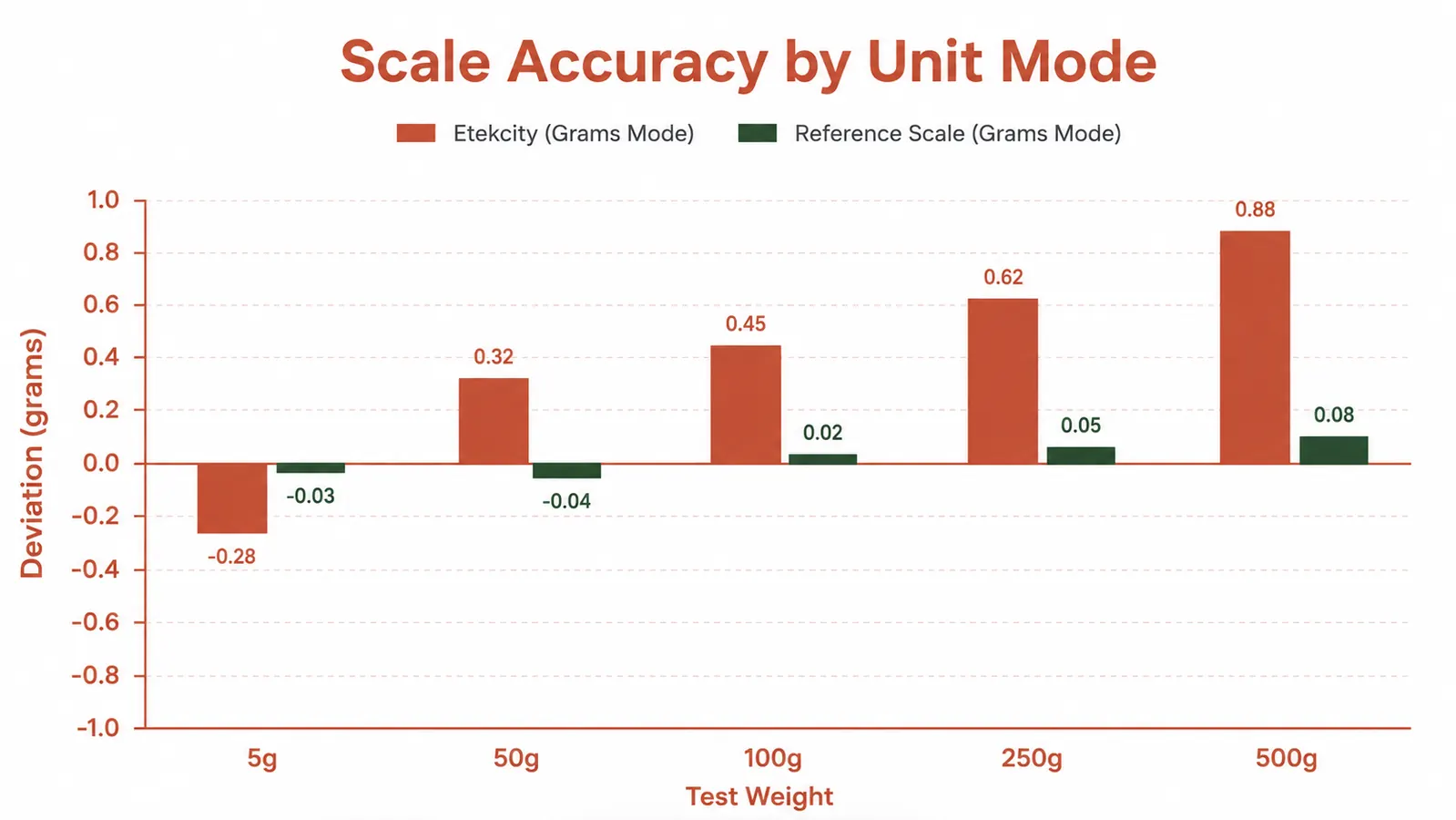
Here is something I noticed inside the first week. When you weigh in grams, the Etekcity reads to 1 gram increments, which is fine for most cooking tasks. Switch to ounces, and it rounds to the nearest 0.1 oz. That sounds close enough until you realize that 0.1 oz is approximately 2.8 grams. If you are tracking macros and your app asks for a food in ounces, a rounding error of nearly 3 grams on a protein portion adds up across three meals and a snack. Over a full day of eating that is tracked in ounces, you could be off by 10 or 12 grams of protein before you realize the readings are not as tight as you assumed.
My workaround was simple: I stopped using ounces entirely and converted everything to grams. Most nutrition databases support gram entries without complaint. But if your workflow is built around the ounce readings on packaged food labels, this scale is going to push you toward a habit change you may not want. That is a real friction point that the star rating does not surface.
The fix is behavioral, not mechanical. The Etekcity is not broken in ounce mode. It is just less precise than it is in grams, and for a device that costs under fifteen dollars, that is a reasonable engineering trade-off. I just want you to know about it before you build a tracking routine around ounce readings.
The Platform Is Smaller Than You Think
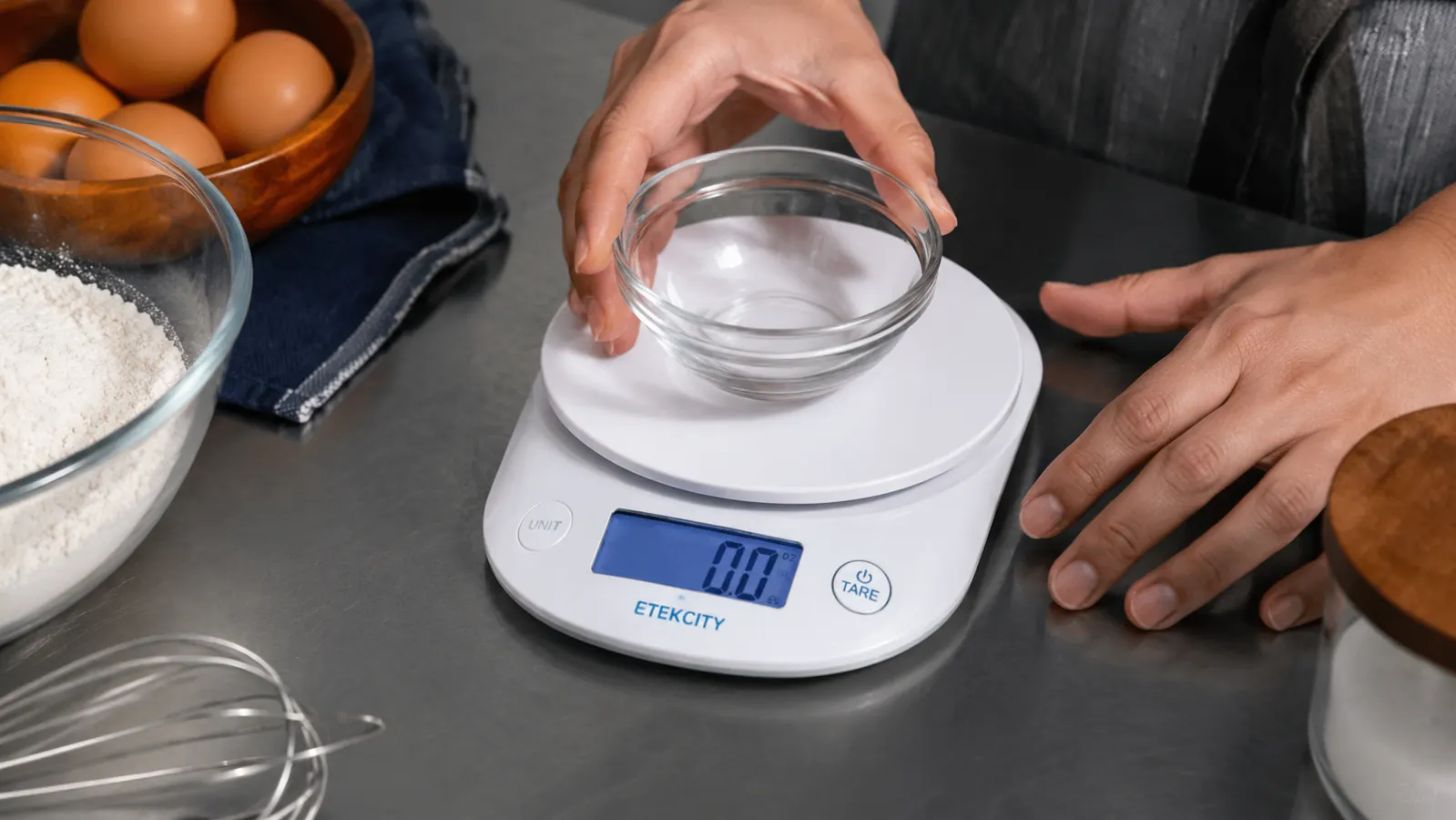
The weighing surface on the Etekcity measures roughly 6 by 5 inches. For most bowls and containers, that is fine. For a large mixing bowl, a big salad bowl, or any container with a base wider than about 5.5 inches, the bowl will hang over the edges. It still weighs accurately, but the whole thing feels precarious. I had a glass bowl slide sideways once while I was adding flour. Nothing broke. It was not a disaster. But it was the kind of moment that made me wish I had spent a little more.
If your prep style involves weighing directly into your cooking vessel, this matters more than it might seem. A large Dutch oven, a wide skillet you are zeroing out to season, a salad bowl for a family portion: all of these will extend past the platform edges. The Etekcity still handles them. It just does not handle them gracefully. If stability matters to you, especially when children are helping in the kitchen or your counter workspace is tight, that physical constraint is worth factoring in before you buy.
The scale is accurate. The platform is just honest about being a budget product. Once I knew that going in, I stopped being surprised by it.
The 1-Gram Floor: Where Spice Bakers and Coffee People Run Into Trouble
The Etekcity reads down to 1 gram. For bread baking, general meal prep, and protein portioning, that is more than enough precision. But there is a specific category of cook for whom this will be a constant limitation: anyone who weighs spices, salt, or coffee grounds at under 3 grams.
A typical single-serve pour-over coffee calls for around 15 to 18 grams of coffee grounds. The Etekcity handles that fine. But if you are the kind of cook who measures 0.5 grams of saffron or 0.8 grams of cayenne for a sauce, this scale will show you nothing useful below 1 gram and will read 1 gram for anything between 0.5 and 1.5 grams. For culinary precision at very small amounts, you need a scale with a 0.1-gram resolution, which typically costs in the mid range and is sold as a jewelry or spice scale.
This is not a flaw in the Etekcity. It is a design category boundary. The Etekcity is a food scale, not a precision scale. But a lot of home cooks who buy it hoping to weigh spices more accurately end up disappointed, and I have seen that complaint buried in the one-star reviews often enough that it is worth addressing directly.
How It Handles Wet Ingredients and High-Moisture Foods
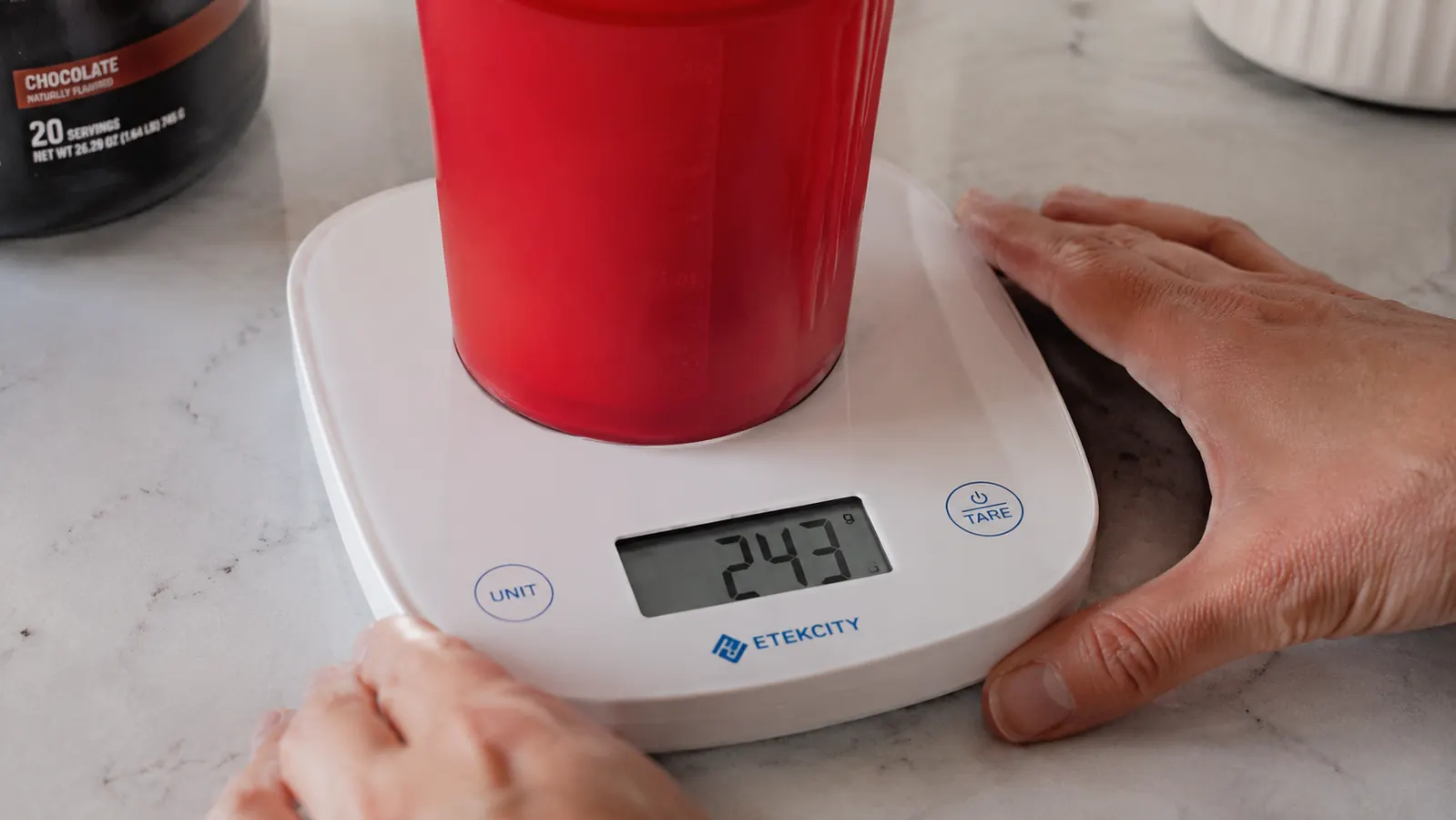
The stainless steel platform cleans well with a damp cloth and handles spills without drama. Where the Etekcity gets slightly awkward is with very wet preparations: ladling broth over the platform, squeezing citrus directly onto the surface, or weighing thawing proteins that release liquid. The button panel sits flush with the surface on most units, and moisture that pools near the buttons occasionally causes a unit to auto-power-off or give a flicker reading.
I solved this by keeping a silicone bowl or a piece of plastic wrap under anything wet. It adds a step, but it also keeps the sensor area cleaner over time. If you are the kind of cook who weighs produce straight out of a rinse or portioning raw fish, build that extra container into your workflow from day one.
The auto-off timer is set at approximately 2 minutes of inactivity. For most weighing tasks, that is fine. For slow recipe builds where you might weigh ingredient one, walk across the kitchen to grab ingredient two, and come back ninety seconds later, you will sometimes return to a blank display. You have to press the power button again, which resets your tare. That is a mildly annoying loop if your recipe has five or six separate weighing steps. It is the kind of thing that sounds minor but adds a low-grade friction to every cooking session once you notice it.
Who Should Skip the Etekcity and Spend More
There are three specific types of home cook who will outgrow this scale quickly or be bothered by it consistently.
The first is the serious bread baker who is working with preferment weights, hydration percentages, and salt down to 0.5 percent of total flour weight. At scale weights around 500 to 1000 grams, the Etekcity is accurate enough. At salt quantities of 8 to 12 grams where 1 gram of error is a 10 percent swing in salt level, you want a scale with finer resolution and a platform that can hold a large proofing bowl without the edges hanging over. For sourdough or high-hydration doughs specifically, that extra investment in a better scale pays off in loaf consistency faster than almost any other upgrade.
The second is anyone using the scale for serious macro tracking who insists on weighing in ounces. As I mentioned earlier, the 0.1-oz rounding accumulates. If you are meticulous enough about nutrition to weigh every ingredient, you are probably meticulous enough to be bothered by a 3-gram rounding window. Switch to grams and the problem largely disappears, but if that habit change feels like too much friction, look at the OXO Good Grips scale or similar mid-range options. I compared both in detail in a separate article on the Etekcity vs OXO kitchen scale comparison if you want the side-by-side breakdown.
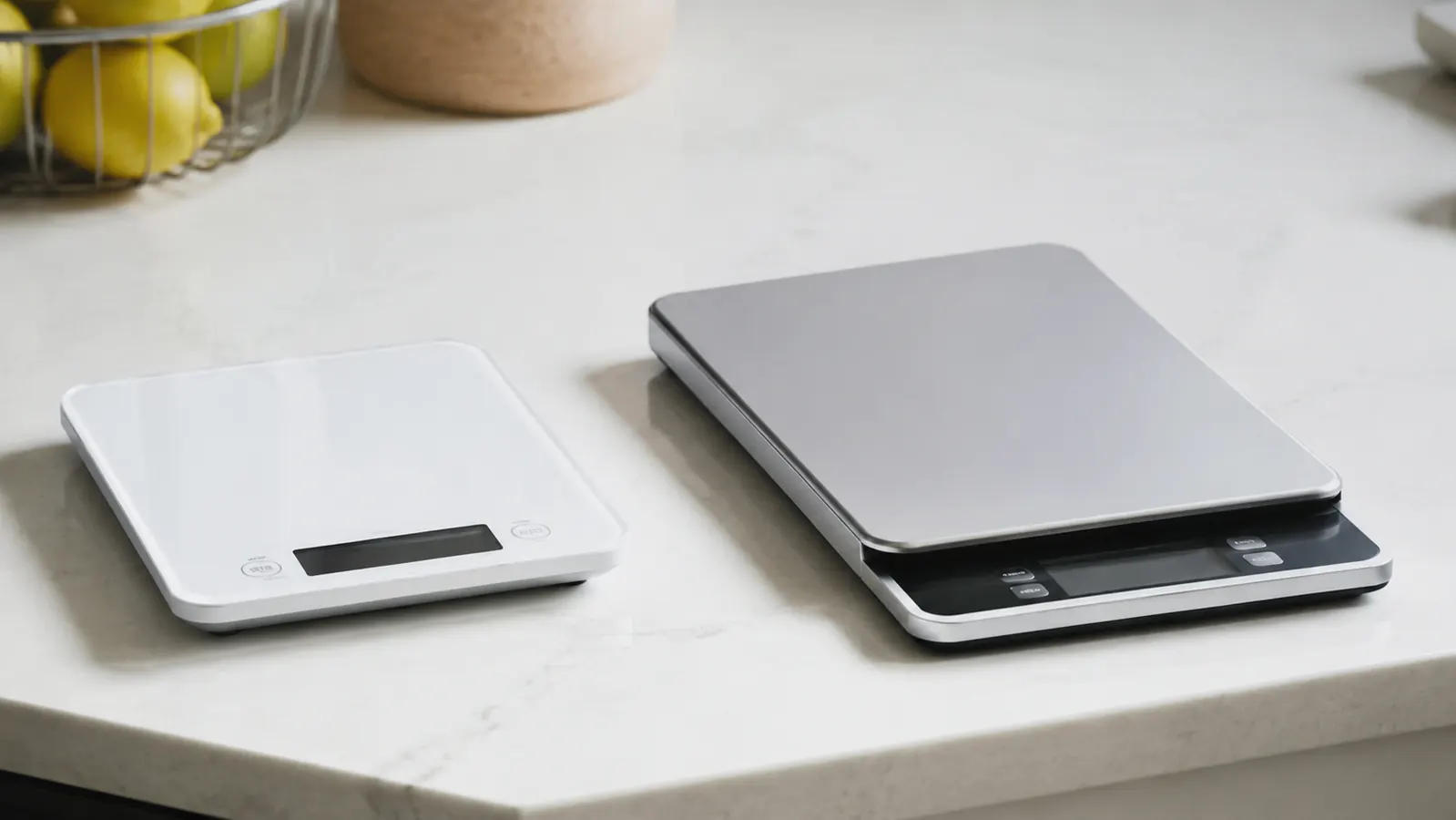
The third is anyone who does a lot of multi-ingredient prep in large vessels. If you regularly cook for four or more people and use a large stock pot or wide mixing bowl as your primary container, the smaller platform will be a recurring mild frustration. The OXO's wider platform and pull-out display are worth the price difference in that specific scenario.
Then Why Does It Win Anyway?
Because for the way most home cooks actually use a kitchen scale, none of those limits matter most of the time. The Etekcity reads in grams accurately enough to make a real difference in baking consistency. It tares instantly, switches units without fuss, and wipes clean in under ten seconds. The batteries that come in the box have lasted me through hundreds of weighings without any sign of dying. The form factor is slim enough that it fits in a drawer and does not become counter clutter.
The reason 174,000 people gave it 4.6 stars is not because they missed the limitations. It is because for weeknight cooking, healthier meal prep, and casual baking, this scale does exactly what you need without making you think about it. There is real value in that. A tool that works without requiring workarounds for your most common tasks is a good tool, even if it has edges. Most of those 174,000 reviewers are not bread bakers chasing 0.5-percent salt ratios. They are people who got tired of guessing and wanted a simple, reliable way to measure ingredients. The Etekcity answers that need completely.
I use mine most often when prepping grain bowls and portioning proteins for the week. The Etekcity handles both of those tasks without any of the friction points I described above. For that specific use, it earns its space on my counter every single time.
The Battery Setup and Display: Small Details That Add Up
Two AAA batteries power the unit. They are included in the box, which is not universal at this price point and is a small thing that matters when the package arrives and you want to use it immediately. The LCD display is clear in normal kitchen lighting but washes out slightly in very bright overhead light. I had to shift the scale a few inches on my counter to avoid direct under-cabinet lighting hitting the display at an angle that made the digits harder to read.
The display shows the unit (g, oz, ml, lb) in the corner, which helps when you are mid-recipe and want to confirm you have not accidentally switched modes. The tare button doubles as the mode-change button on some firmware versions, which tripped me up twice early on. The fix is to hold the button to change units rather than tapping it. Once you know that, it becomes second nature and the display becomes one of the more informative readouts at this price point.
Who This Is For
The Etekcity kitchen scale is the right buy if you are a home cook who wants to start weighing ingredients instead of eyeballing them and does not want to spend much doing it. It handles everyday portioning, basic baking, and gram-based macro tracking cleanly. If you are new to using a kitchen scale, this is a solid entry point that will teach you the habit without costing you much if you later decide to upgrade. The low price means almost no risk in trying it. If it clicks for you, you have a useful daily tool. If you outgrow it, you spent under fifteen dollars to figure out exactly what you need from a more expensive scale. Either way, you win. For the full workflow on using a scale for nutrition tracking, the guide to tracking macros with a kitchen scale covers the step-by-step setup in detail.
Who Should Skip It
Skip the Etekcity if you bake bread with high-precision hydration percentages, weigh spice-level quantities under 3 grams regularly, insist on ounce-mode accuracy, or cook large-batch meals in wide vessels. In any of those scenarios, the OXO or a comparable mid-range scale will pay for its higher price in reduced daily friction within a few weeks. The Etekcity is genuinely excellent at what it does. It just does not do everything, and knowing that going in will save you from the frustrated one-star review you might otherwise write six months from now.
What I Liked
- Accurate gram readings for everyday portioning and basic baking
- Instant tare response with no lag
- Slim low-profile design stores flat in a drawer without clutter
- Batteries included and long-lasting across hundreds of uses
- Switches between grams, ounces, milliliters, and pounds without menus
- Stainless steel platform wipes clean in seconds
- Under fifteen dollars makes the entry cost genuinely low risk
Where It Falls Short
- Ounce-mode rounds to 0.1 oz, which is a 2.8-gram window per reading
- 1-gram minimum increment makes sub-gram spice and salt measurements impossible
- Platform is narrow for large mixing bowls or wide cooking vessels
- Auto-off at roughly 2 minutes resets tare and interrupts multi-step prep
- Display can wash out under strong direct overhead or under-cabinet lighting
- Moisture near the button panel can trigger erratic readings or auto-shutoff
It has real limits. For most kitchens, it still wins.
If your cooking falls outside the three specific scenarios where this scale frustrates, the Etekcity is one of the cleanest decisions you can make for your kitchen. Check today's price on Amazon and see if it fits your situation.
Amazon Check Today's Price on Amazon →